Morocco's High-Speed Train: A Model for Success
In a thought-provoking opinion piece published by the San Francisco Chronicle, writer Joe Matthews critically addresses the California authorities regarding the shortcomings of their high-speed rail infrastructure in comparison to Morocco's impressive achievements. The article, titled "How Morocco Surpassed California in the High-Speed Rail Race," highlights the stark contrast between Morocco's successful implementation of the Al-Boraq train service and California's ongoing struggles with its rail project, despite its vast financial resources.
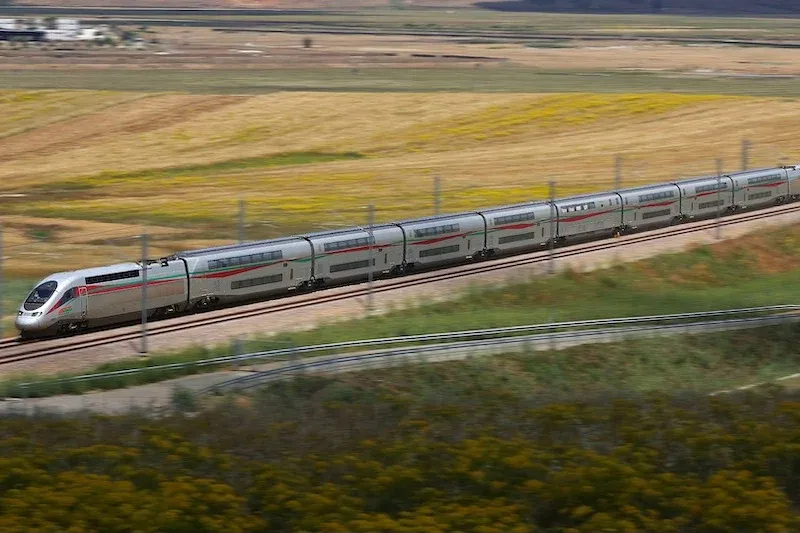
Matthews begins by sharing a personal experience aboard the Al-Boraq train, which swiftly transported him from Casablanca to Tangier in a mere two hours and seventeen minutes. Prior to the launch of this line in 2018, travelers would spend approximately five hours on the same journey. He describes the train as both comfortable and modern, noting that the scenic views along the route reminded him of California, albeit punctuated by conversations in Arabic and French among the passengers.
The author argues that comparing Morocco to California is not unusual, given that both regions have similar land areas and population sizes, alongside extensive coastlines and agricultural landscapes. However, he points out that California's economy is over twenty times larger than that of Morocco, and yet the latter has successfully completed its high-speed train project while California remains unable to finalize its own.
The article emphasizes that Morocco constructed a 323-kilometer rail line at a cost of approximately $15 million per mile, which stands as one of the lowest costs globally. In stark contrast, California's project has surpassed $200 million per mile, with ongoing budget increases and a delay pushing the expected completion to 2033.
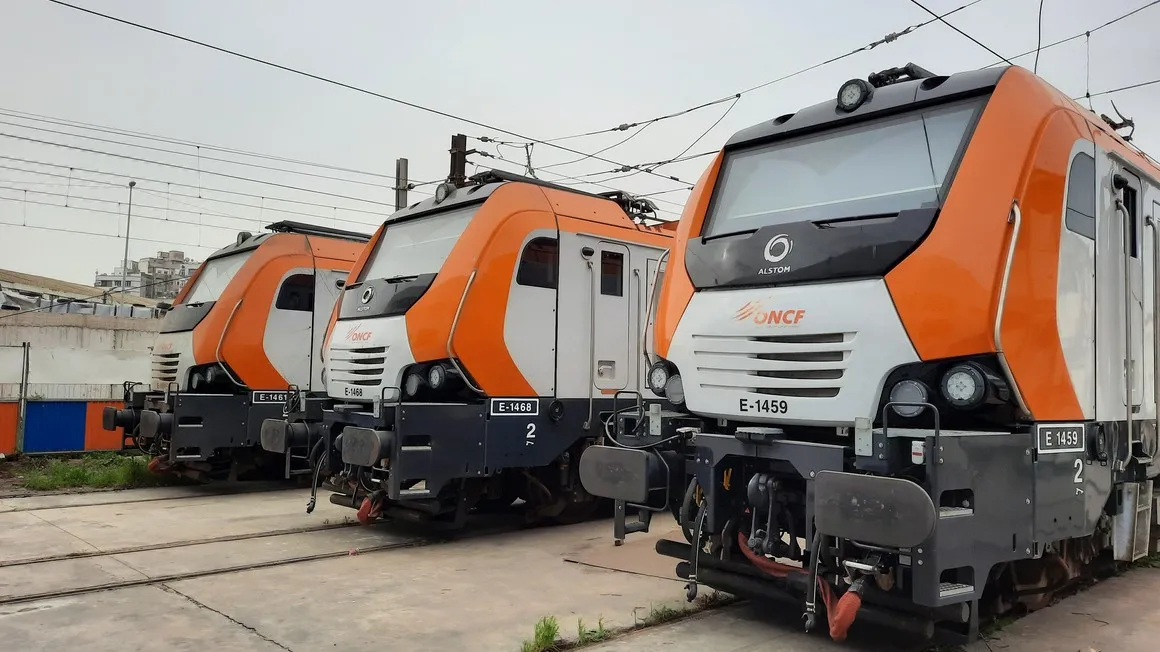
Several factors contribute to Morocco's success, according to Matthews. Key among them is the close collaboration with the French National Railway Company (SNCF) and Alstom, allowing Morocco to leverage international expertise rather than overly relying on consultants. Additionally, utilizing existing stations instead of building new ones helped to keep costs down and expedite the project’s timeline.
Interestingly, the Al-Boraq train does not operate at its maximum speed throughout its entire route. It initially shares conventional tracks between Casablanca and Rabat before transitioning to a high-speed line north of Kenitra, where it reaches speeds of up to 192 miles per hour (approximately 309 kilometers per hour). Matthews considers this practical solution to be a key factor in the early operational success of the project, yielding early revenues.
The article also outlines Morocco's ambitious plans to expand its rail network to 1,500 kilometers by 2030, coinciding with the hosting of the World Cup. This expansion includes a new line to Marrakech and Agadir, enhancements to urban transport in Casablanca, and the development of a high-speed line between Rabat and Kenitra.
In conclusion, Matthews acknowledges that Morocco benefits from a more centralized governance model, which facilitates the execution of large-scale projects. However, he insists that this is not the sole reason for its success. He posits that the real lesson California should learn from Morocco is to rely on institutional expertise, reduce bureaucracy and consultant involvement, and make practical decisions that enable project completion instead of striving for unattainable perfection that leads to delays. He leaves readers questioning whether Californians are ready to embrace the lessons Morocco has to offer.
As reported by hespress.com.