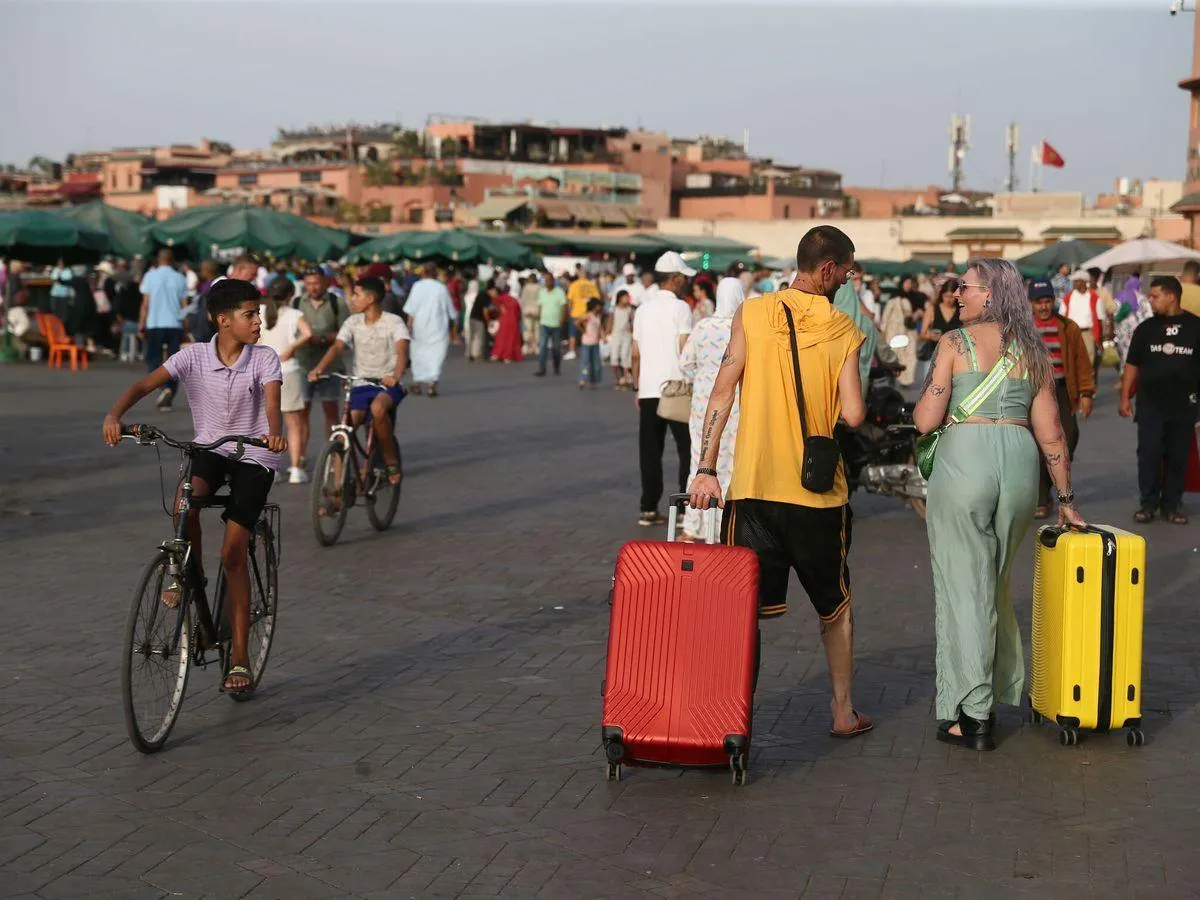
In a rapidly evolving tourism landscape, Morocco emerges as a formidable competitor to the Canary Islands, located less than 500 kilometers away. The North African nation has witnessed a remarkable 23.6% growth in its hotel industry in 2026 compared to the previous year, and for the first time, it surpassed the Canary Islands in tourist numbers, attracting nearly 20 million visitors—a 14% increase from the prior year. This surge in tourism is a testament to Morocco's strategic investment in essential infrastructure such as airports and transportation, making it an increasingly attractive destination alongside the Canary coasts, particularly due to its competitive pricing in hotels and dining.
Canarian business associations are acutely aware of this growth; however, they currently do not perceive it as a direct threat to their tourism sector. Pedro Alfonso, president of the CEOE of Tenerife, expressed a pragmatic outlook, stating, "I am not particularly worried; it is logical that others try to develop their tourism models." He emphasized the importance of enhancing efficiency and competitiveness in response to increasing competition. Similarly, Pedro Ortega, president of the Confederation of Canarian Entrepreneurs (CCE), acknowledged that while Morocco is making significant strides, it is crucial for the Canary Islands to maintain their edge by ensuring quality and effective management in their offerings.
The Canary Islands boast a robust tourism model backed by four decades of experience and historical performance metrics. By the end of the first quarter of 2026, the archipelago achieved record highs in both foreign travelers and tourism expenditure, welcoming 1.5 million international tourists with a total spending of €2.48 billion. Alfonso pointed out that while some destinations may enter the market with aggressive pricing strategies, sustaining such an approach over time is challenging. Real competitiveness hinges not just on low prices, but also on building trust, quality, and customer loyalty.
Jorge Marichal, president of the hotelier association in Santa Cruz de Tenerife (Ashotel), acknowledges the advancements in Morocco's tourism sector but remains confident in the resilience of the Canary Islands' model. He stated, "We need to focus on our own improvements in infrastructure, services, and capacity while keeping an eye on developments elsewhere, knowing that we have a 40-year head start." Marichal, who also leads the Spanish Confederation of Hotels and Tourist Accommodations (Cehat), underscored that merely increasing accommodation capacity is not sufficient; it requires skilled personnel, effective management, and a wealth of tourism-related services surrounding the hotels.
One pressing concern among business leaders is the potential impact of rising fees—specifically, those announced by Aena and the carbon emissions levy imposed by Europe, from which the Canary Islands are exempt until 2030. Airlines like Ryanair have opted to cut back or cancel operations to the Canary Islands due to increased costs while expanding their services to countries perceived as more competitive, such as Morocco. Ortega advocates for administrative support to bolster this ultra-peripheral region belonging to Europe, stressing the need for protection against punitive fees.
According to José María Mañaricua, president of the Federation of Hospitality and Tourism Entrepreneurs of Las Palmas, Europe itself bears responsibility for the challenges faced by the Canary Islands. He insists that "they need to understand that the only way to reach the Canary Islands is by air; there are no alternatives. We cannot shoot ourselves in the foot with these fees." Mañaricua emphasizes that the sector's success lies in the hands of the Canarians themselves, asserting, "We are masters of our destiny and need not be preoccupied with our neighbors; competition has always existed." He also views Morocco's development positively, noting that as their GDP and per capita income rise, it alleviates regional crises and consequently mitigates mass migrations that could impact the Canary Islands.
Marichal downplays the significance of threats from airlines like Ryanair to reduce seat availability to the Canary Islands, stating, "Airlines will go where people want to travel; our focus should be on making the destination appealing, and we will find ways to bring them here." This strategic approach underscores the need for continuous improvement and adaptation in the face of rising competition from neighboring regions.
As reported by laprovincia.es.