Exploring Morocco's Innovative Al Boraq High-Speed Rail
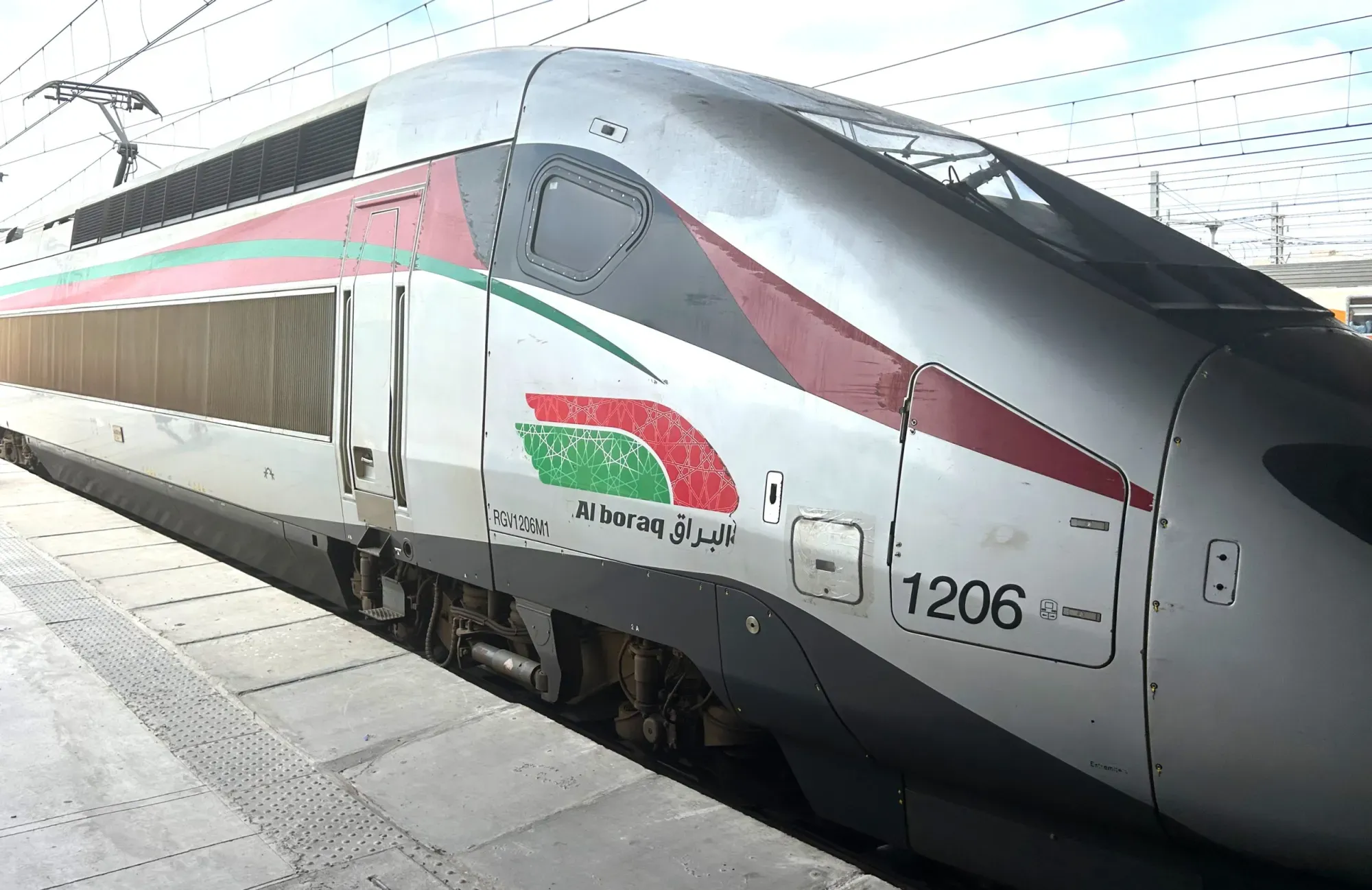
The automated voice echoing through the loudspeakers is not only courteous but also carries a distinct American accent as it announces, "For your convenience, we invite you to make your phone calls from the platform between the cars." Sitting comfortably in a plush green seat, I find myself captivated by the digital speedometer at the front of the carriage, which climbs steadily. Outside my window, the landscape transforms into a familiar blur of scrub, golden grasses, eucalyptus trees, and sprawling oaks, reminiscent of a California high-speed train racing through the Inland Empire or the Central Coast. However, this isn’t California, and the timeline for high-speed rail development in the Golden State remains an enigma, lost in a bygone era. Instead, I am aboard the Al Boraq, Africa's first and only high-speed railway, operated by Morocco's national rail company, ONCF. My journey spans the entire length of the line, commencing at the immaculate 10-track station in Casablanca, adorned with a Starbucks and a McDonald’s, and concluding at the terminal in Tangier, just a stone's throw from the Mediterranean. The schedule promises a travel time of 2 hours and 17 minutes, a stark contrast to the 5-hour journey required before Al Boraq commenced operations in 2018.
It's astonishing to realize that Morocco has successfully implemented high-speed rail while California is still grappling with delays and excuses. Although the comparison between these two regions may seem arbitrary, it reveals an intriguing narrative. Both Morocco and California share striking similarities in terms of size—Morocco spans 172,000 square miles while California covers 163,000—alongside comparable populations, with California housing 40 million residents compared to Morocco's 37.4 million. These regions are characterized by their elongated shapes bordering coastlines, dotted with coastal cities, beautiful beaches, arid deserts, and lush agricultural areas. However, a significant disparity exists in their economic stature; California's economy, valued at nearly $4 trillion, dwarfs Morocco's lower-middle-income status, with a nominal GDP of approximately $150 billion, placing it 96th in global rankings.
Lessons from Morocco's Efficient Rail System
Despite California's claims of insufficient funds for high-speed rail, Morocco has successfully constructed a 323-kilometer (201-mile) line, overcoming substantial engineering challenges, including 286 separate structures and 13 impressive viaducts—most notably, the striking 3.5-kilometer El Hachef viaduct located south of Tangier. How did Morocco, with its limited resources, achieve this remarkable feat? The answer lies in strategic international partnerships, a focus on structural efficiency, and a firm political commitment to progress. Morocco's Al Boraq line, with a construction cost of just $15 million per mile, stands among the lowest globally. In comparison, the initial segment of California's high-speed project, spanning 171 miles from Bakersfield to Merced, is projected to cost nearly $35 billion, equating to approximately $200 million per mile.
Morocco's efficiency stems from its collaboration with French partners such as SNCF and engineering powerhouse Alstom, who worked closely with Moroccan teams to ensure seamless execution of the project. This partnership also gave rise to a dedicated training center aimed at equipping local workers with the technical skills necessary for the long-term maintenance of the double-deck Avelia Euroduplex trains. In contrast, California has relied on a revolving door of executives and external consultants, which has led to a staggering budget exceeding $125 billion, missed deadlines, and an anticipated opening pushed back to 2033.
Rather than attempting to construct an expansive, multi-thousand-mile high-speed rail network overnight, Morocco opted for a pragmatic approach, initiating its project with a strategic Phase 1 that utilized four existing stations, minimizing the need for new construction. Although one might debate the true definition of "high-speed" in the context of Al Boraq—especially when compared to California's aspirations—the train operates on conventional tracks from its southern terminus at Casa Voyageurs in central Casablanca, navigating through the densely populated urban sprawl before reaching the dedicated high-speed tracks. This decision to slow the train in urban areas was a calculated compromise that allowed for a swift launch of the line, linking it to local rail services and the Casablanca airport, ultimately generating revenue and public enthusiasm.
The popularity of Al Boraq is evident, with trains consistently full of young passengers, and transportation officials have indicated that the funding borrowed for this project may be repaid ahead of schedule. As the train glides past Kenitra, just 45 minutes north of Rabat, it accelerates to speeds of 269 kilometers per hour and then surges past 320 kilometers per hour (equivalent to 161 to 192 miles per hour) as it approaches Tangier. This single coastal line represents only the first phase of an ambitious 1,500-kilometer (932-mile) high-speed network, projected for completion by 2030, coinciding with Morocco co-hosting the FIFA World Cup alongside Spain and Portugal. In preparation for this global event, the Moroccan government has launched an extensive $14.3 billion rail development initiative, which includes extending high-speed service between Rabat and Kenitra and establishing a commuter rail system for Casablanca and its suburbs, now home to over 4 million people. The pièce de résistance will be the construction of a new high-speed line stretching south from Casablanca to Marrakech, ultimately reducing the travel time from Tangier to Agadir from a taxing 9-hour drive to under four hours—an equivalent journey to that from San Diego to San Francisco.
It’s noteworthy to consider how much progress Morocco has made in a timeframe that California has squandered. While voters in California approved high-speed rail in 2008, Morocco commenced its feasibility studies in 2006, with construction kicking off in 2011. As California continues to deliberate the completion of a segment connecting Bakersfield to Merced, Morocco is actively laying the groundwork to connect its entire kingdom in time for the World Cup, all while California struggles with local zoning issues and environmental lawsuits that hinder progress.
While Morocco benefits from a centralized government, with King Mohammed VI—a key figure with significant personal investments in infrastructure—driving these projects forward, attributing Morocco's success solely to its autocratic governance overlooks critical factors. Morocco's achievements are rooted in its willingness to adopt proven foreign technologies, a focus on institutional expertise instead of predatory contractors, and a commitment to prioritizing speed over perfection. As my train arrives at the Tangier station precisely on schedule—2 hours and 17 minutes later—I feel a blend of respect and frustration. The North African kingdom possesses valuable lessons for California, should its citizens choose to listen.
As reported by zocalopublicsquare.org.