
Royal Insights on Morocco's Economic Evolution
The Sovereign has emphasized that the ongoing evolution of Morocco's economy is set against a backdrop of institutional stability and effectiveness that have enabled the nation to achieve positive results across various sectors. "Thanks to the prevailing security and stability, combined with institutional efficiency, positive indicators are proliferating in all activity sectors, thereby reinforcing the momentum of economic emergence and further safeguarding national sovereignty," he stated, while recalling the impressive growth rate of 4.9% recorded in 2025 and the favorable prospects for the current year.
This momentum also extends to the agricultural sector, which has benefited from a fruitful campaign following significant rainfall. The King noted that, "From this favorable context, the country emerges with a more robust water and food security," highlighting the progress made in this strategic area for the national economy.
Industrial Growth and Sectoral Strength
However, industry remains one of the principal engines of this ascension. The Sovereign pointed out that Morocco has solidified its status as a "magnet for investments aimed at industrial, tourism, and financial activities," particularly due to the development of high-value-added sectors. Currently, the automotive, aerospace, renewable energy, and agri-food industries stand as essential pillars of the national productive fabric, given their capacity to attract investments, generate wealth, and create jobs. The automotive sector exemplifies this transformation. "Today, Morocco has become the leading automotive exporter in Africa, with an annual production capacity of approximately one million vehicles," the King reminded, specifying that the automotive and aerospace sectors now account for over 40% of national exports, surpassing the phosphate industry.
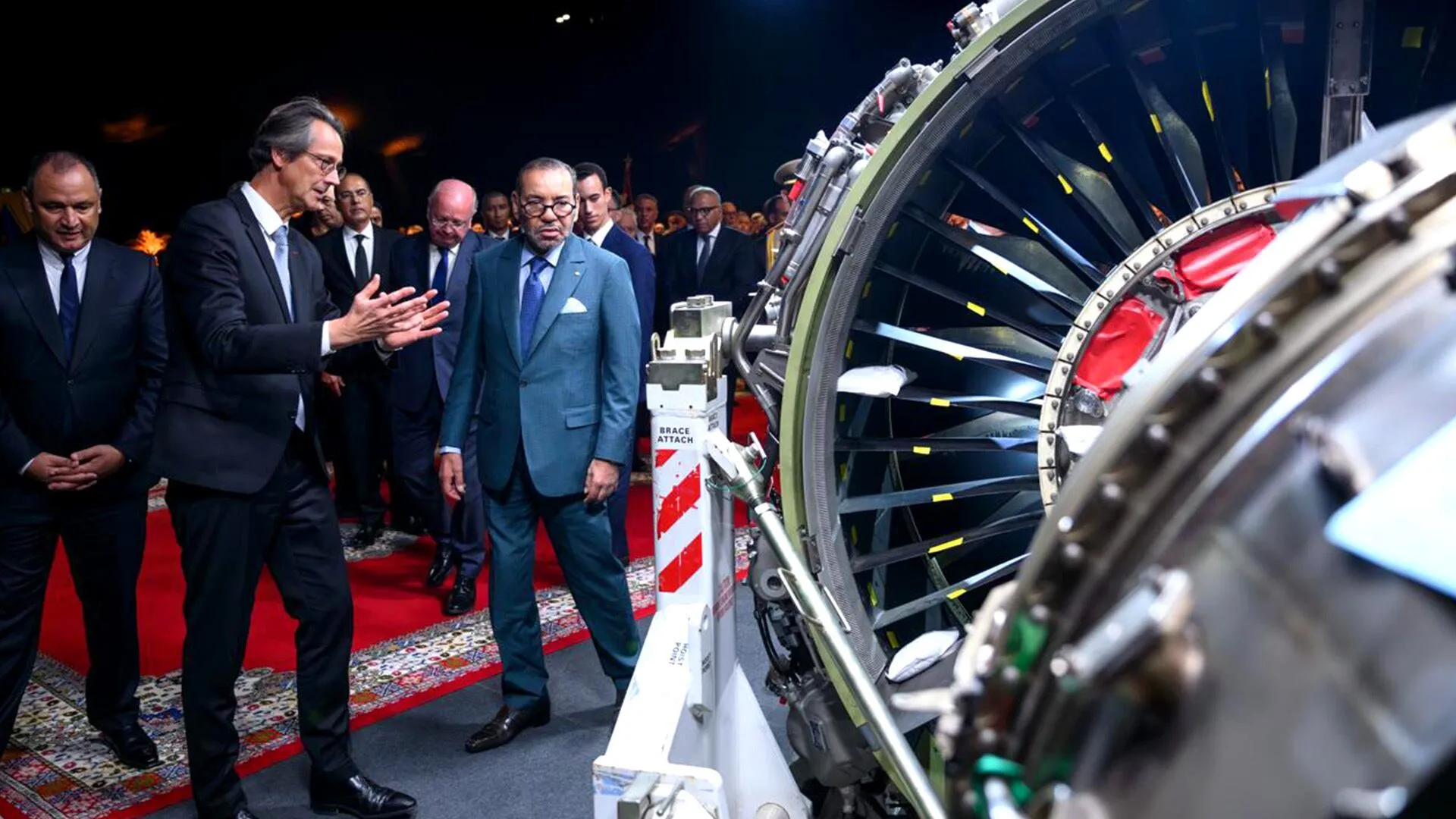
This transformation is also relevant in the aerospace sector, where the Kingdom aspires to reach a new milestone by integrating the most advanced segments of the global value chain. The Sovereign recalled the recent launch of new industrial units aimed at positioning Morocco among the elite countries with major hubs specializing in the manufacturing of aircraft engines and landing systems. Furthermore, in anticipation of future technological shifts, Morocco is keen on developing an integrated electric battery sector, illustrating the Kingdom's readiness to adapt to upcoming technological transformations and to embed itself within the production chains linked to strategic industries.
The energy transition represents another critical aspect of this strategy. The projects initiated in renewable energies aim to establish them as "a pillar of energy security and a lever for attracting industries in search of competitive and decarbonized energy." This ambition extends with the deployment of Morocco's green hydrogen initiative, which has already made significant strides with the granting of licenses for a group of megaprojects aimed at operationalizing this vision.
Finally, tourism continues to affirm its role in the national economic dynamic, having recorded a historic performance in 2025 with nearly 20 million visitors, including members of the Moroccan community residing abroad, thereby solidifying its position among the growth engines of the Kingdom.
Through these various sectors, Morocco is pursuing a trajectory of transformation grounded in productive diversification, investment attraction, and the strengthening of its economic sovereignty.
As reported by fr.le360.ma.


