King Mohammed VI Receives Bank Al-Maghrib's Annual Economic Report
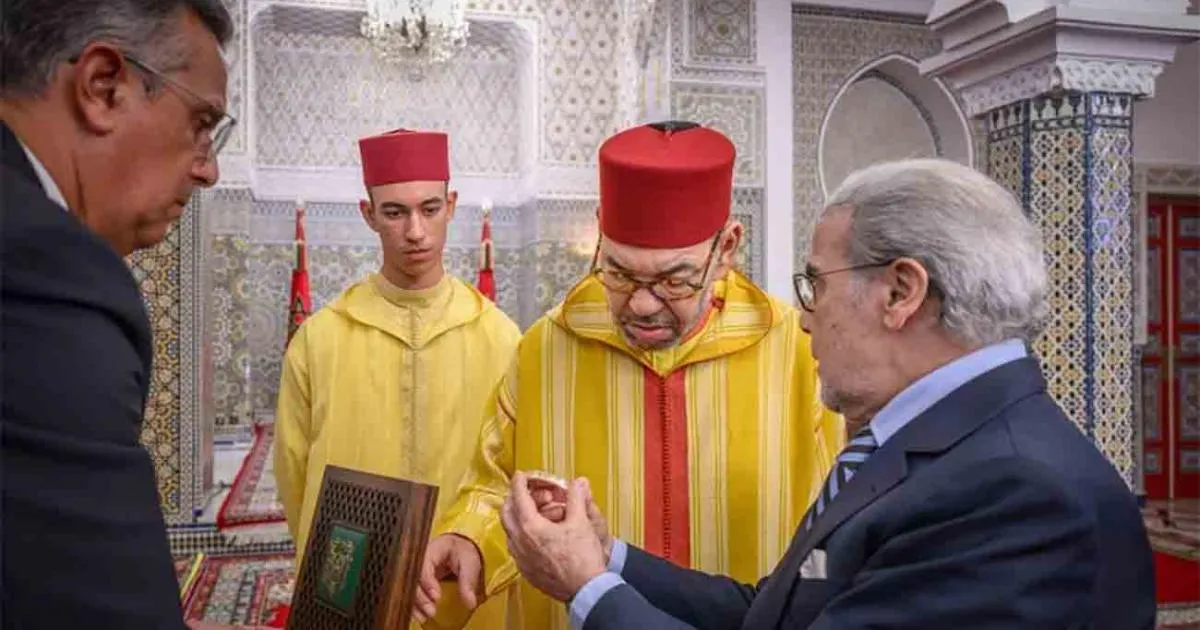
TETOUAN — In a significant meeting at the Royal Palace in Tetouan, King Mohammed VI welcomed Abdellatif Jouahri, the Governor of Bank Al-Maghrib, Morocco's central bank. During this audience, Jouahri presented the annual report detailing the economic, monetary, and financial status of Morocco for the financial year 2025. This report sheds light on the resilience and growth of the Moroccan economy amid various global challenges.
Jouahri's address to the King highlighted that Morocco's economy demonstrated remarkable growth despite facing a backdrop of global shocks and uncertainties. The country's GDP grew by an impressive 4.9%, primarily fueled by substantial investments from both public and private sectors. Notably, inflation was kept under control, averaging a mere 0.8% throughout the year. This stability in inflation rates reflects the effectiveness of Bank Al-Maghrib's monetary policy, which adopted an accommodating stance by reducing its key policy rate to 2.25%. This move aimed to support liquidity demands from commercial banks and enhance credit accessibility for Very Small Enterprises (VSEs).
Key Economic Indicators and Challenges Ahead
The report provided a comprehensive overview of key economic indicators for 2025. The GDP growth rate of 4.9% signifies a positive trajectory driven by robust investment activities. Inflation remained at 0.8%, indicating controlled price levels despite pressures from global supply issues. Moreover, the fiscal deficit narrowed to 3.5% of GDP, largely due to strong tax revenues and innovative financing strategies. The nation’s foreign reserves reached a substantial 443 billion MAD, which comfortably covers approximately 5.5 months of imports, showcasing the stability of Morocco’s external accounts.
Despite these positive developments, Jouahri pointed out that the unemployment rate persisted at 13%, highlighting the need for job creation to keep pace with the growing economy. The narrowing of the fiscal deficit was encouraging, but the Governor emphasized that continuous efforts are necessary to ensure that economic growth translates into tangible benefits for the population.
One of the critical issues discussed was the perception gap regarding economic growth and its distribution among the populace. Jouahri noted that despite the robust economic indicators, there's a disconnect between measured growth and the lived experiences of citizens. He identified two primary factors contributing to this gap: sluggish job market integration and social inequalities. Jouahri reiterated the importance of enhancing education and training systems to better align with market needs, as well as addressing social safety nets to ensure they effectively reach the most vulnerable communities.
To maintain fiscal flexibility amidst high expenditures and upcoming pension reforms, the Governor called for strict resource rationalization and regular reviews of expenditures. He also advocated for accelerated reforms of the Organic Law on Finance to foster a more resilient fiscal environment.
In terms of strategic priorities for long-term resilience, Jouahri emphasized the need for establishing strategic reserves of essential commodities and accelerating the transition to renewable energy. He underscored that effective water governance must be prioritized due to the adverse effects of climate change on Morocco's water resources. Furthermore, advanced regionalization efforts, spurred by Royal directives, should continue to mobilize local talent and reduce regional disparities.
In conclusion, Jouahri asserted that consolidating Morocco's economic gains requires ongoing collaboration among public and private stakeholders under the guidance of the Monarchy. Following the presentation, he formally presented King Mohammed VI with the annual report and a commemorative solid gold coin minted by Bank Al-Maghrib in celebration of the first anniversary of "Aid Al Wahda." This meeting not only reflects the ongoing commitment of Morocco's leadership to economic stability but also their dedication to addressing the challenges that lie ahead.
As reported by middle-east-online.com.