
Enhancing Water Security through Local Desalination
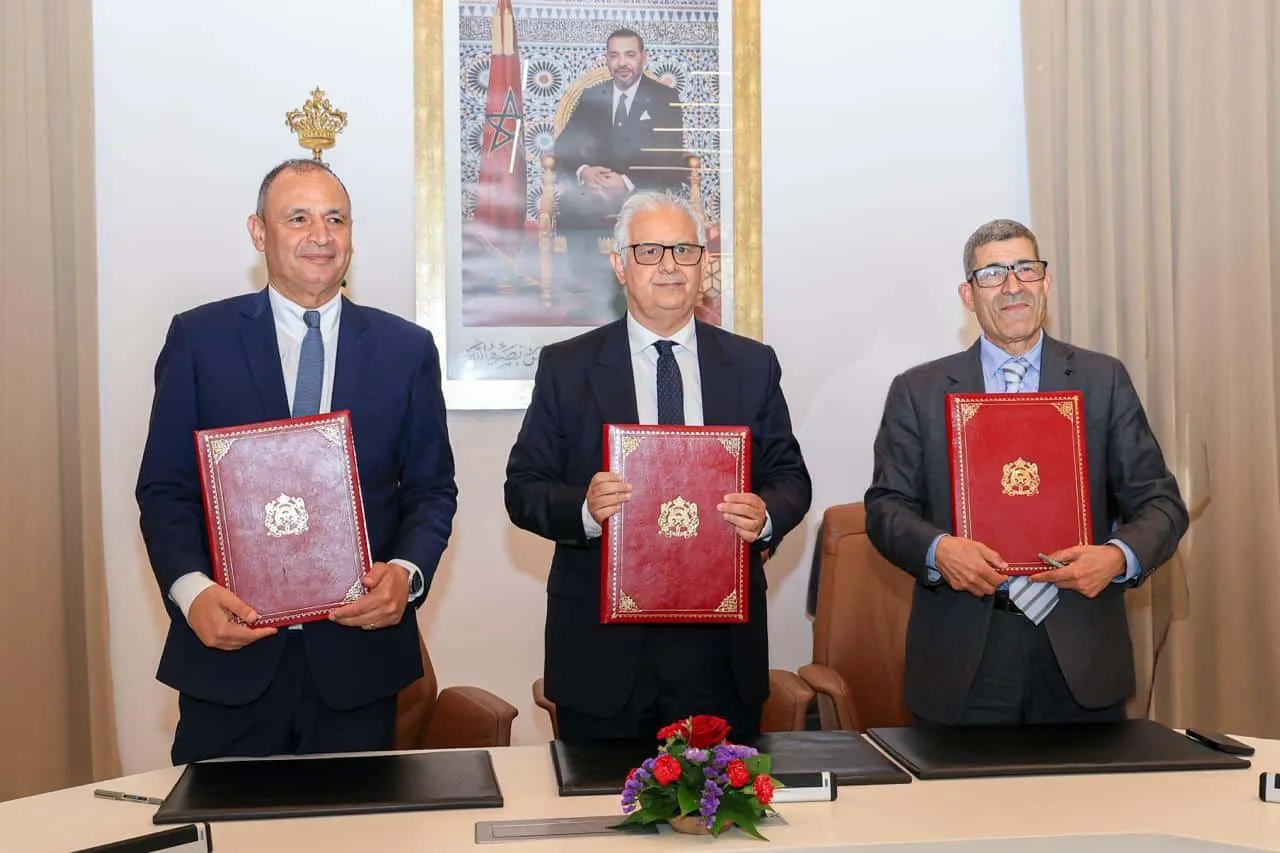
On April 29, 2026, Morocco took a significant step towards securing its water resources by signing a framework agreement in Rabat aimed at establishing a comprehensive industrial ecosystem centered around water desalination technologies. This agreement, inked by Nizar Baraka, the Minister of Equipment and Water, Ryad Mezzour, the Minister of Industry and Trade, and Amine Mohamed, the president of the Moroccan Water Professions Cluster, seeks to address the kingdom's increasing demand for potable and industrial water. The initiative aligns with the strategic directives of King Mohammed VI, focusing on water security and accelerating infrastructural investments, particularly through the development of a national desalination industry.
The framework encompasses support for industrial and technological projects linked to desalination, the promotion of local integration and the 'Made in Morocco' label, as well as the enhancement of innovation, applied research, and technology transfer. It also aims to foster skill development and tailor educational programs to meet the sector's needs. According to officials, this agreement is expected to bolster the nation's resilience against water stress by diversifying supply sources and encouraging innovative solutions suitable for the national context. Mobile water treatment units are already operational in various regions, showcasing the growing capabilities of these systems.
Aiming for Local Integration in the Desalination Sector
The Moroccan government has ambitious plans to increase the local integration rate in the desalination sector, currently estimated between 30% and 35%, to 70%. This effort is not only about meeting national demand but also about creating a competitive industry that can position itself for export opportunities. The Moroccan Water Professions Cluster is anticipated to play a pivotal role in mobilizing businesses, structuring the value chain, and developing equipment related to water professions. This agreement marks a crucial milestone in the implementation of the national desalination strategy, which is poised to become a key lever in managing water resources sustainably, innovatively, and independently.
As reported by medias24.com.


