Introduction of the Tower Mohammed VI in Casablanca
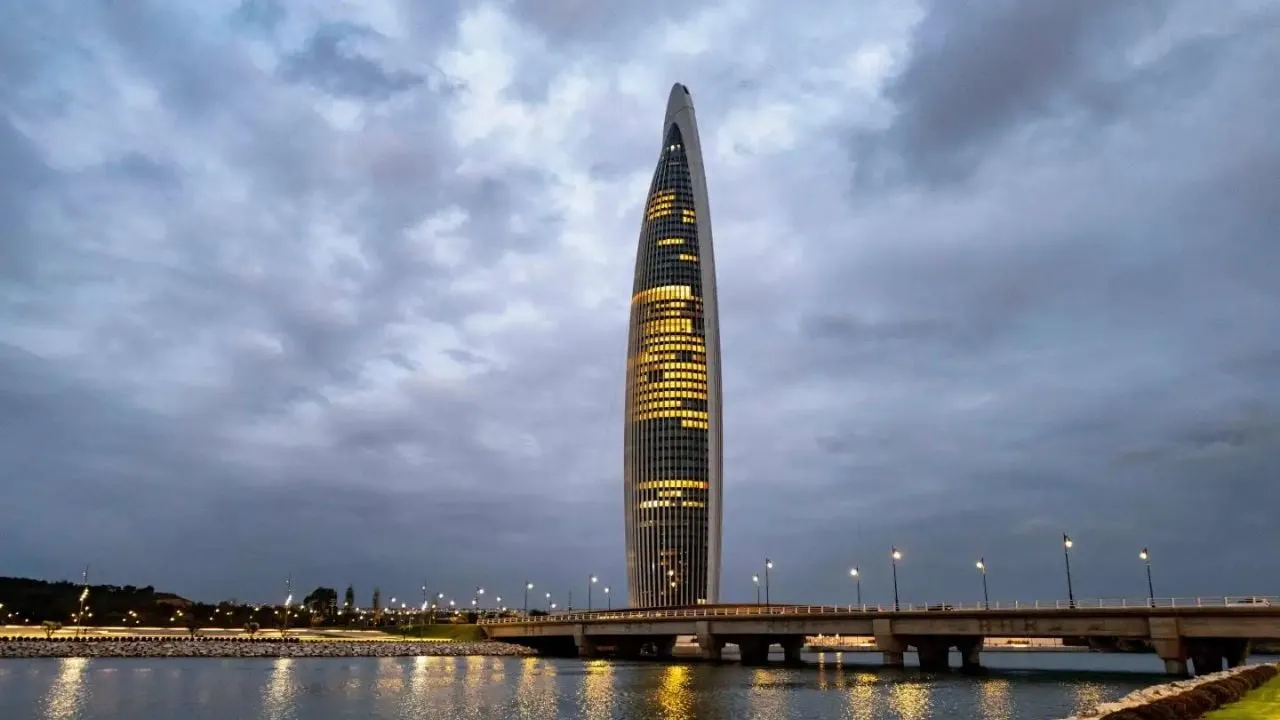
In a significant development that underscores Morocco's expanding global ambitions, a striking 55-story skyscraper, known as the Mohammed VI Tower, officially opened its doors in Casablanca this week. This monumental structure, which boasts a staggering investment of $700 million, dominates the historical urban landscape of the Moroccan capital, signaling a new era of architectural innovation and economic potential for the nation.
A Multifaceted Development and Economic Impact
The Mohammed VI Tower, named after King Mohammed VI, draws inspiration from a rocket poised for launch, reflecting both modernity and ambition. This impressive building will house a luxurious Waldorf Astoria hotel, expansive office spaces, high-end retail shops, gourmet restaurants, and premium residential apartments. According to Leila Haddaoui, director of the development company O Tower, the skyscraper is expected to create approximately 450 direct jobs and an additional 3,500 indirect jobs, significantly contributing to the local economy.
Located in Salé, a city closely linked to the capital Rabat, the tower's construction took eight years and involved over 2,500 workers from more than a dozen countries. Its architectural significance is underscored by its appearance on the Moroccan 200 dirham banknote, which is roughly equivalent to $20. The tower is strategically positioned near the Grand Theater of Rabat, designed by the late Iraqi-British architect Zaha Hadid, and offers breathtaking views of the Atlantic Ocean and the twin cities.
This ambitious project is part of Morocco's broader initiative to elevate the international profile of Rabat and Salé, cities that often remain overlooked by tourists. Haddaoui emphasized that this development is part of a larger tourism push aimed at attracting more visitors to Morocco, a nation already recognized as the most visited country in Africa. As regional conflicts redirect travelers toward perceived safer destinations, Morocco is keen to enhance its appeal, especially as it prepares to co-host the FIFA World Cup in 2030.
The newly inaugurated tower represents more than just a building; it symbolizes Morocco's increasing soft power in Africa and the Middle East. It reflects the country's desire to emerge as a leading regional player through large-scale development projects aimed at expanding its influence. However, critics argue that such developments are primarily concentrated along Morocco's Atlantic corridor, leaving other regions underdeveloped. Protests led by Generation Z last year highlighted grievances over high unemployment rates and inadequate public services.
With a total area exceeding 102,800 square meters (approximately 1.1 million square feet), the tower was envisioned by Othmane Benjelloun, a 93-year-old billionaire and owner of Bank of Africa, which was once state-owned and now holds significant influence across the continent. According to a statement from the building's administration, the idea for the skyscraper originated from a 1969 invitation by NASA to Benjelloun for a pre-mission simulation flight for the Apollo 12 lunar mission.
As reported by proceso.com.mx.