Morocco's Rising Automotive Industry and Competitive Labor Costs
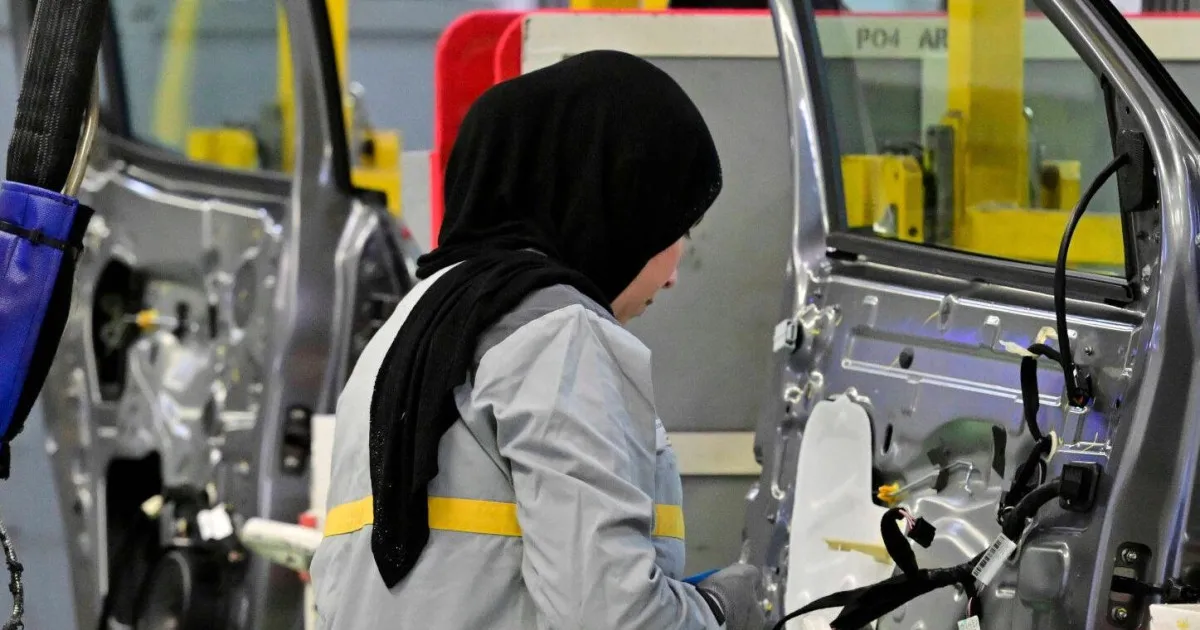
Over a year ago, Carlos Tavares, the CEO of Stellantis, warned Spain that its primary industrial competitor was not its European neighbors, but rather Morocco, a nation that has been meticulously preparing for over a decade to establish itself as a viable alternative to European and Spanish manufacturing. The crux of this competitive edge lies in Morocco's labor costs, which are significantly lower than those in Spain. A Moroccan worker earns between 500 and 600 euros per month, whereas their Spanish counterparts earn around 2,000 euros. Consequently, the labor cost per vehicle in Morocco stands at approximately 150 euros, compared to Spain's staggering 850 euros. This stark contrast in labor costs substantially enhances Morocco's industrial competitiveness.
Morocco currently produces about 500,000 vehicles annually, and this figure is expected to grow. The nation has invested in infrastructure by constructing two of the Mediterranean’s largest ports in Tangier and Nador, aiming to control commercial access to the sea and position itself as a premier automobile distribution hub. The strategic plan involves producing vehicles on a large scale in the three factories operated by Stellantis and Renault in Morocco, enabling quick shipments to Europe by crossing the Strait of Gibraltar. Such logistical efficiency has been bolstered by European financial support for the development of these ports.
Establishment of a Cutting-Edge Battery Factory
In a significant development, Morocco has recently initiated the construction of a battery factory, marking another chapter in its challenge to the European automotive sector. It is worth noting that the only major battery plant that Brussels attempted to establish in Sweden failed two years ago. Europe is presently grappling with challenges in local battery production; for instance, Volkswagen's large battery facility in Valencia has postponed its production start date to next year due to internal issues. The overarching problem is that China has a firm grip on battery technology and is reluctant to share it with European enterprises.
The technological partner for Morocco's new battery factory is Gotion, a Chinese multinational that will collaborate in the production of lithium-based batteries. This plant will initially boast a capacity of 10 gigawatt-hours, with projections to scale up to around a hundred gigawatt-hours once fully operational. Gotion's factory is strategically located in Kenitra, right where Stellantis manufactures vehicles for brands like Peugeot and Citroën. Interestingly, this facility will produce the types of batteries that will be in high demand by VW plants in Navarra and Martorell, as well as by Stellantis in Zaragoza. Furthermore, it is highly likely that the Renault and Stellantis factories in Morocco will also start producing cost-effective electric vehicles powered by these newly manufactured batteries.
As reported by eldebate.com.