Government's Shortcomings and the Call for Accountability
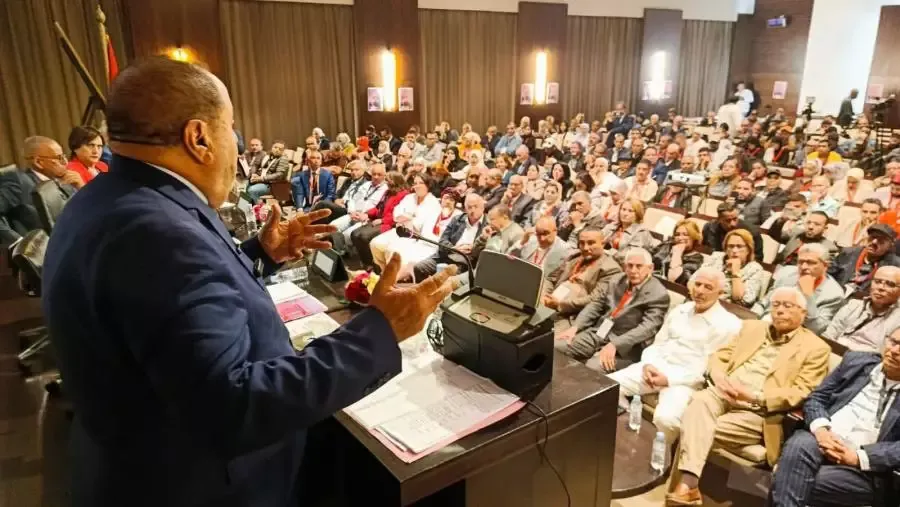
During the third regional conference of the Socialist Union of Popular Forces held in Marrakech on April 25, 2026, the party's first secretary, Idriss Lachkar, delivered a compelling speech highlighting the government's failure to fulfill its ten commitments presented before Parliament. He expressed concerns regarding the stalling economic growth, job creation, and the alarming decline in women's participation in the workforce, which has dropped to a mere 19%. Furthermore, he pointed out the government's inability to complete social protection projects or significantly reduce poverty levels, which remain persistently high. The situation has been exacerbated by inflation and the rising cost of living, adversely affecting the middle class.
Lachkar underscored the phenomenon of "government overreach" and its resultant institutional imbalances, asserting that this has severely impacted Morocco's democratic experience. He criticized the majority for undermining the opposition's role in oversight and accountability, further emphasizing the government's failure to reduce regional disparities, which were promised to be lowered to below 39% but now stand at approximately 59.3%. Lachkar also noted the stagnation of educational reforms and the slow implementation of the official status of the Amazigh language at legal and institutional levels.
According to Lachkar, seven of the government's commitments have not been realized at all, while only three have been partially met, with no commitments fully achieved. Despite these criticisms, he clarified that the party is not nihilistic, acknowledging some achievements made under the auspices of royal directives, such as the expansion of health coverage and a significant increase in public investment, alongside record levels of foreign investment. However, he stressed that these positive indicators do not translate into improved living conditions for citizens, who continue to grapple with high prices and inadequate basic services.
Organizational Developments and International Stance
On the organizational front, Idriss Lachkar revealed that the party's administrative committee approved a democratic nomination process aimed at reinforcing collective decision-making within party structures. He highlighted that both the political bureau and the administrative committee have prioritized nominations for members of the federal parliamentary team, recognizing their high level of performance. He noted that, despite having only 35 members, the party ranks first among all parties in terms of legislative proposals and oversight roles, and he praised the party's approach to "responsible opposition" that has contributed to alleviating social tensions.
In discussing candidate management, Lachkar mentioned the case of parliamentarian Nour Eddine Ait Haj who chose not to run for re-election, emphasizing that the party accepted this decision only after he proposed a consensus alternative within the party's local organization. He also pointed to the unanimous endorsement of Mohamed Mellal in the Essaouira region, assuring that the party leadership is committed to executing grassroots decisions. He disclosed a preliminary candidate list for several provinces, including Mohamed Mellal in Essaouira and Ahmed Toumi in Kelaat Sraghna, stressing that nominations in other regions, such as Marrakech and Al Haouz, will be subject to internal discussions, ensuring representation for women and youth.
On the international stage, Lachkar characterized the global context as turbulent with numerous hotspots of conflict, asserting that the party adopts a balanced methodology rooted in peace values. He condemned the actions against Palestine, holding the Israeli right-wing government accountable for escalation, and emphasized that the defense of the Palestinian cause must be pursued internationally by parties, unions, and civil society. He remarked, “We in the Socialist Union believe that advocating for Palestine cannot be confined to internal discussions.” He called for an end to the war in the Gulf, reiterating that the party champions balanced positions that respect national values and interests, rather than impulsive reactions.
Lachkar concluded his remarks by urging citizens to take responsibility and engage in a “real battle for accountability and justice,” reaffirming that the Socialist Union will continue to advocate for democracy and social justice while strengthening its presence as a viable political force both nationally and internationally.
As reported by anwarpress.com.