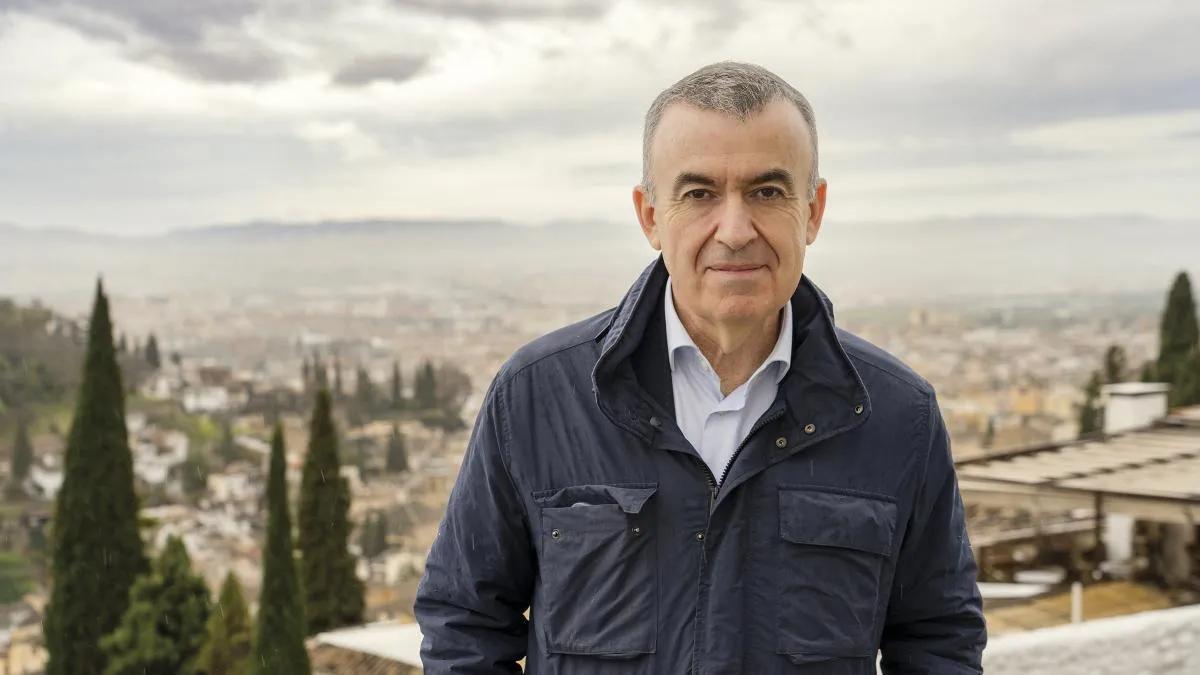
General Miguel Campins (1880-1936) stands as a pivotal yet often overlooked figure in the tumultuous history of early 20th-century Spain. Known for his unique position within the military hierarchy, Campins had personal encounters with influential figures such as Franco and opposed Queipo de Llano, the latter of whom ordered his execution for refusing to support the military uprising. This intriguing character has been brought to life in the latest work by renowned author Lorenzo Silva, titled *Con nadie* (Destino). Silva presents Campins as a solitary man of principles, who remained neutral amidst the conflict between the insurgents and the Republicans, neither siding with the uprising nor complying with orders to arm the populace.
Lorenzo Silva, acclaimed for his successful crime fiction series featuring Bevilacqua and Chamorro, delves into the historical narrative surrounding Campins, marking his sixth exploration of the Moroccan War. Silva states, "I do not know anyone with greater war experience in Morocco: from 1911 to 1927, he fought at the front lines in all significant campaigns and operations across various military branches, including infantry, artillery, cavalry, and even as an aviator.” His journey into Campins's life began when he met the general's grandson, prompting him to document this compelling story. In a historical narrative that intricately weaves in the figures of Franco and Queipo de Llano, Silva's book is sure to face intense scrutiny. However, Silva was familiar with the Campins family, which raises the question of how he navigated the pressure of writing about such a complex figure.
Silva acknowledges the need for thoroughness in dealing with historical characters, stating, "You must assume that everything will be read closely. The presence of these two figures may attract special attention, but the only way to approach it is to try to understand them as deeply as possible and not to speak of their actions and words without sufficient documentary support.” He emphasizes that documented facts define us, sometimes even more than our words, especially if they portray us negatively. The Campins family has been respectful of Silva's work, understanding his commitment to conveying what he believes to be the truth without bias against or in favor of anyone, including Campins himself. The general, with his complexities and dilemmas, is presented as a fundamentally exemplary figure.
Starting the book with a clear declaration of intent, Silva states, “Whoever writes this is a novelist, not a historian, and even less a biographer.” This leads to the intriguing question of how a novelist accustomed to pure fiction transitions into historical storytelling. Silva explains that there is little difference for him between narrating invented events and those grounded in historical fact, as both require making the story understandable and engaging. He believes that storytelling should instruct and delight, which necessitates that the storyteller themselves is educated and entertained by the material.
The relationship between a novelist and historical events depends greatly on the individual writer, the context, and the specific narrative. Silva starts from a place of respect for documented facts and conducts thorough research to ensure accuracy. He acknowledges that while he may create characters and scenarios for narrative purposes, he increasingly prefers to rely on proven facts, as they carry more weight than mere speculation. He reflects on the cruelty of humanity, noting that while battlefield violence may appear more extensive, the murderous impulse can be just as ferocious in personal conflicts. Silva's exploration of the Moroccan wars in *Con nadie* sheds light on a period rarely revisited in fiction compared to other historical events, asserting that these wars significantly shaped contemporary Spain's history.
Silva articulates that the Moroccan wars represented a detrimental reframing of Spain's modern history, suggesting that without these conflicts and the figures involved, including Campins, Franco, and others, the catastrophic events of 1936 cannot be fully understood. He recalls that long before the disaster at Annual, concerns about the potential calamity of colonial ventures in Africa were voiced by thinkers such as Ángel Ganivet, who published warnings as early as 1897. Silva argues that those in power often neglect the insights buried within literature, as many who lead in Spain tend to read little and reflect even less.
He provocatively questions whether someone could have said “no to war” to avert the conflict, noting that many voices, particularly among families sending their sons to fight, expressed opposition, albeit with little influence. Referencing Ramón J. Sender, who chronicled his experiences in these wars in *Imán*, Silva ponders how a hypothetical meeting between Sender and Campins might have unfolded, suggesting they might have mutually respected each other despite their differing ranks. Campins, who served as the military commander of Granada, famously refused to support the rebels and declined to arm the working militias, adhering to his principles even when few were inclined towards rational analysis.
Silva tackles the ironic and grotesque reality that the insurgents condemned a military figure for rebellion, especially considering they were the very ones imposing such sentences on those who sought to uphold discipline. Franco's complex relationship with Campins is explored in the novel, where Silva attempts to portray Franco’s multifaceted character, revealing a side of him that is less known: one that seeks mercy rather than denial. The contrasts between Franco and Campins, who led parallel lives, are illustrated through their respective merits and shortcomings.
Despite both being labeled “Africanists,” Franco's rapid ascent through the military ranks starkly contrasts with Campins’s steady adherence to duty, which often yields fewer rewards. The narrative reveals that Franco wrote letters to Queipo de Llano advocating for Campins's life, but these were disregarded, with Queipo demanding no further correspondence on the matter. Many believe Franco could have done more to save Campins, such as personally appealing to Queipo or urging the Burgos Junta for clemency, although Silva interprets Franco’s avoidance of direct confrontation as a sign of his desire to protect his own position. After General José Sanjurjo's death, Silva speculates on the factors that tilted the balance in favor of Franco over Queipo de Llano and contemplates how Spain would look today had the latter prevailed.
As reported by lavanguardia.com.