UNESCO's Recognition of Moroccan Musical Traditions
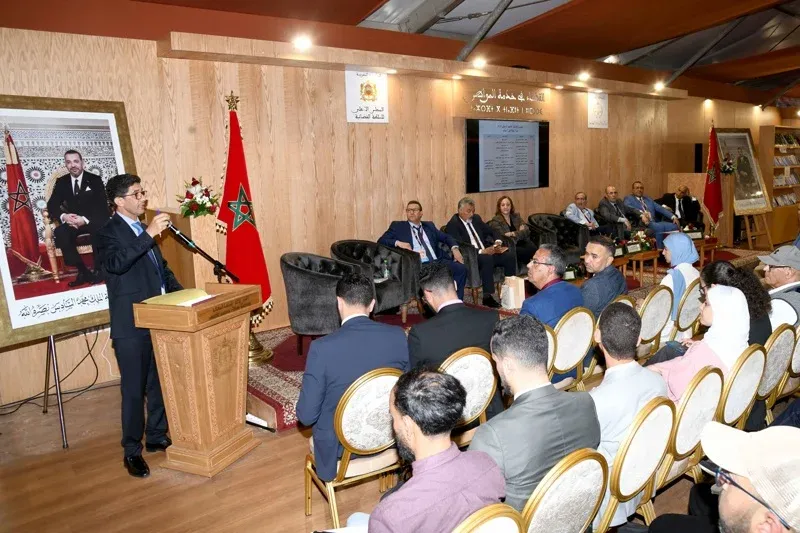
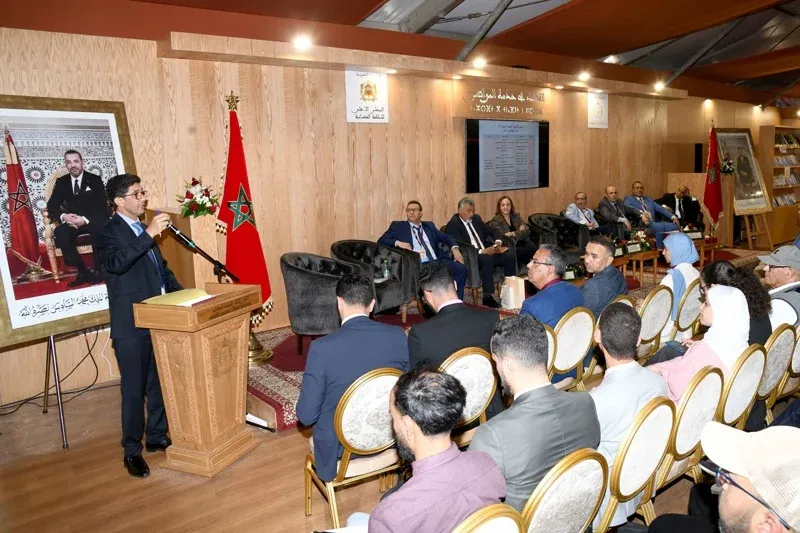
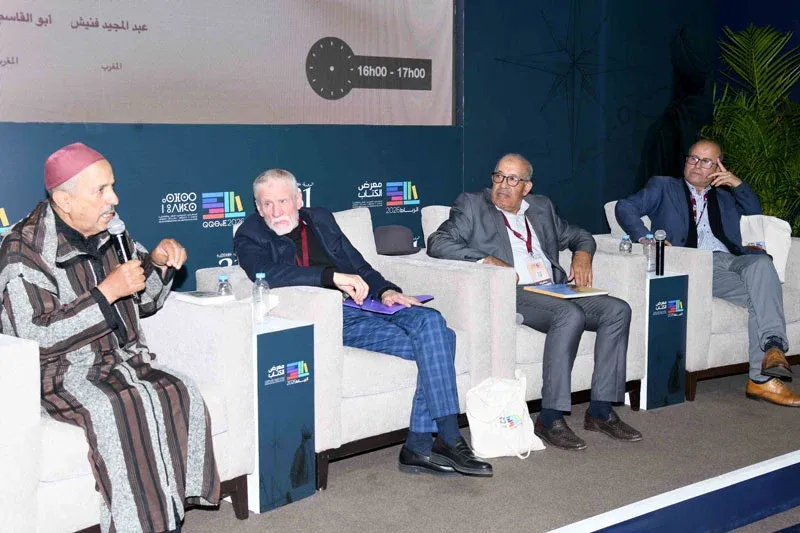
At the International Exhibition of Publishing and Book in Rabat, specialists gathered to discuss the topic of "Moroccan Music Recognized by UNESCO". Notably, the renowned Gnawa master, Abdel Salam Alikan, shared insights into the journey of documenting the art of Gnawa as part of the World Heritage list. He elaborated on his quest to trace the origins of Gnawa female singers, which he found to span across four languages from West Sudan, highlighting the long history of its Moroccan adaptation.
Alikan recounted the timeline leading to UNESCO's recognition of Gnawa as a global heritage, stating, "I was fortunate to represent Gnawa art in Bogotá, Colombia; however, the registration process was extensive. We initiated the documentation in 2013, ensuring that the Gnawa community participated in endorsing their heritage's inclusion in UNESCO. It was not until 2019 that UNESCO granted its recognition." He emphasized the importance of not merely resting on this acknowledgment but focusing on the subsequent actions and benefits. "We have lagged behind other countries that have established dedicated schools to preserve their creative heritage, regardless of its nature," he added.
Tracing the Origins of Gnawa Art
Discussing the origins of "Taknawit", Alikan mentioned the arrival of various African art forms to northern Morocco. He noted, "When Gnawa musicians encountered the Qadiriyya and Hamdushiya brotherhoods, this style was amalgamated into a Moroccan context. Over centuries, the poetic narratives shifted from their original African roots, gradually becoming more Moroccan in essence." Throughout his artistic travels in countries such as Mali, Niger, Togo, and Burkina Faso, Alikan sought to explore the "roots of the Gnawa vernacular", discovering that the music sung in Morocco encompasses influences from Bambara, Fulani, Hausa, and Tamachek languages. He pointed out that many "masters" sing "Taknawit" without understanding its linguistic origins, a realization that inspired him to document these linguistic connections in a published book.
Abdel Majid Fanish, a theater director and researcher of Moroccan arts, also discussed the recognition of Malhoun as a global heritage, emphasizing its Moroccan roots. He explained that the development of its nomination unfolded over two levels: the first being a century-long journey before the nomination process, which included the involvement of significant figures such as Mohammed Fassi studying at the Sorbonne in France and his discussions with Mohammed Belhassan Al-Marrakshi, a respected scholar and poet from Marrakech. This collaboration led to the exploration and literary classification of Malhoun poetry.
Fanish added, "A series of seemingly simple yet systematic procedures followed, including the translation of Malhoun poems into French and the categorization of these works based on poets and themes. Dr. Abbas Al-Jarari, who specializes in Moroccan poetry, later engaged in academic discussions outside Morocco, particularly in Cairo, where Moroccan universities often overlooked colloquial works." He further noted the evolution of Malhoun's presence in Moroccan media, its adaptation into theater, and its integration into modern musical contexts, transforming it from a static and traditional narrative to a more dynamic and contextually relevant art form.
Furthermore, Fanish raised the critical question of what comes after classification, highlighting that recognition is merely a means, not an end. He emphasized the need for Malhoun to engage with its local environment and to become a shared human heritage. He called for a new vocabulary for its poetics and rhetoric, as the challenge ahead appears more daunting than the journey thus far.
Abu Al-Qasim Al-Shabri, a researcher and official in the Ministry of Culture, discussed UNESCO's 2003 convention on intangible heritage and the role of the Islamic Educational, Scientific and Cultural Organization (ISESCO) in establishing a global headquarters in Rabat, which also compiled a list of Islamic world heritage. He noted the significance of UNESCO's work, which resonates with the principles of the Universal Declaration of Human Rights, emphasizing the ethical obligations of member states to preserve and promote intangible heritage.
Finally, Abd Al-Aati Al-Hilu, a researcher and former supervisor of the intangible heritage department at the Ministry of Culture, highlighted the wealth and diversity of Morocco's musical landscape and the various rhythms that express deep personal and collective emotions, underscoring the importance of preserving this vital aspect of Moroccan culture.
As reported by hespress.com.