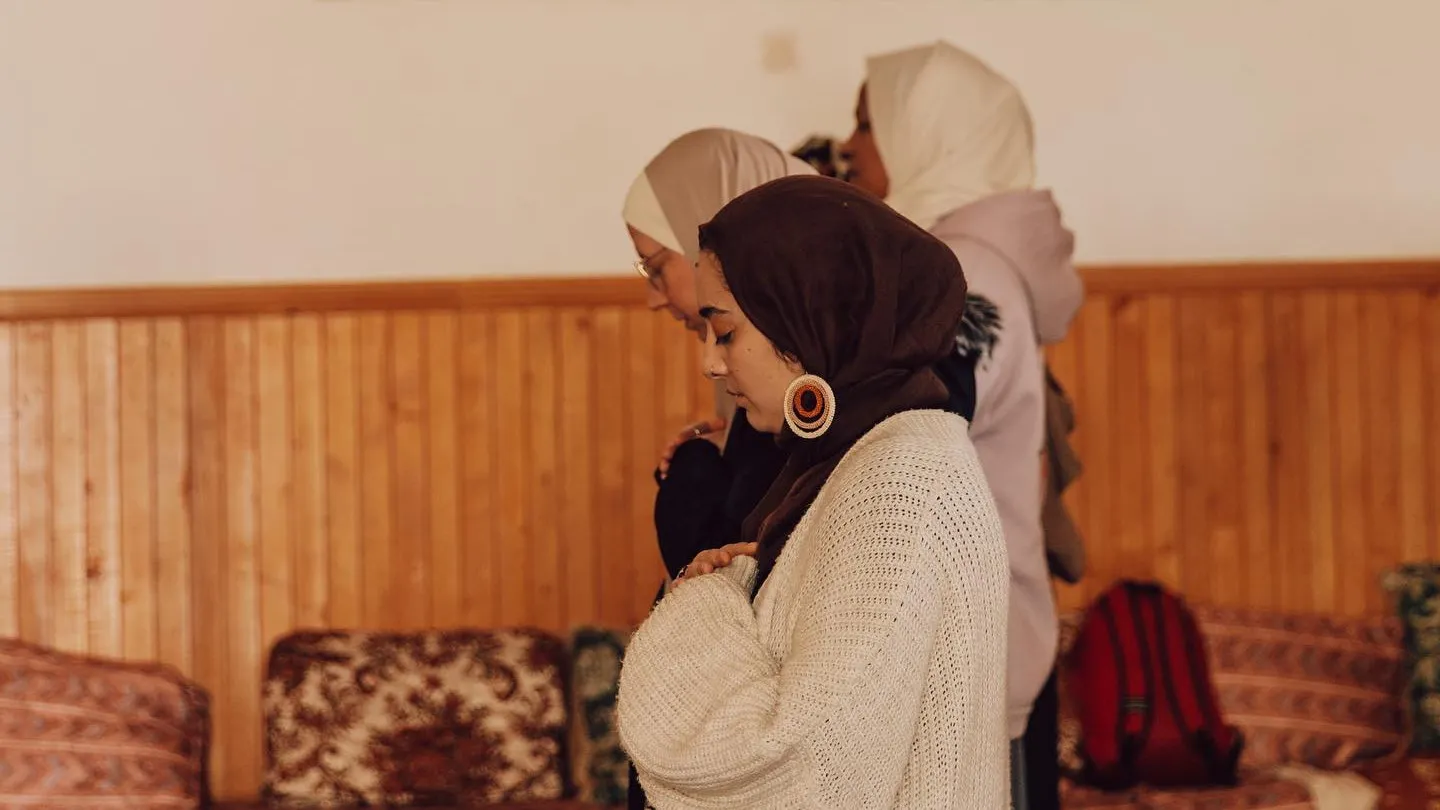
Barakah’s Womb: A Space for Spiritual and Physical Healing
Fes, a city steeped in history and spirituality, is often regarded as the heart of Morocco, boasting a legacy that spans over a thousand years. Known as the ‘City of Saints’, it is home to numerous revered scholars and ascetics, including the notable 12th-century Amazigh scholar, Sidi Ali ibn Harzihim. Additionally, Fes is recognized as the site of the world’s oldest university, Al Quaraouiyine, founded by the visionary Fatima Al-Fihri in 859 CE, and houses the largest medina globally, famous for its artisanal carpet bazaars and the renowned Chouara Tannery. In this rich cultural backdrop lies the initiative Barakah’s Womb, which has emerged as a sanctuary for Muslim women seeking to reconnect with their femininity and spiritual essence.
Launched in 2018, Barakah’s Womb offers a variety of retreats, workshops, and courses that emphasize the importance of nurturing both the physical and spiritual dimensions of womanhood, with a special focus on the womb. My own journey with this initiative began in November 2022, when I attended their inaugural retreat, where I joined a diverse group of women in a picturesque riad. Together, we engaged in night prayers, crafted our own tasbih beads, prepared massage oils, sang nasheeds, played the daf drum, and learned about the ancient art of womb steaming.
At this retreat, I had the privilege of meeting Shakirah Sabira, the founder and doula behind Barakah’s Womb. Our connection had been fostered online for years, yet this was our first encounter in the physical realm. Shakirah's journey into the world of traditional birth began when she witnessed her first birth at the tender age of 18. She later pursued doula studies at Amani Birth and Midwifery, a prestigious institution, and holds ijazah in various Islamic sciences, having graduated from the Al Fajar Institute in Cairo. She is also the author of The Womb’s Tale: The Sanctity of the Womb and Her Cycle, a work that emphasizes the deep connections between femininity, spirituality, and health.
The Spiritual Significance of the Womb in Islam
The term 'womb' in Arabic, or rahm, transcends mere biological definition; it embodies kinship and divine mercy, as both concepts share the same root letters. This linguistic intertwining reflects a profound connection to compassion and divine care. A hadith narrated by Aisha bint Abi Bakr reinforces this notion, stating that kinship is derived from Allah, emphasizing the divine importance of maintaining familial ties. Shakirah articulates that caring for the womb is not merely a health concern but a spiritual act of worship, underscoring the womb's role as a vessel of life and a source of mercy and cyclical wisdom.
Moreover, the health of the womb significantly influences hormonal balance, emotional well-being, fertility, and overall vitality. Neglecting this aspect of health can lead to a disconnection from one’s body and the spiritual awareness that comes from understanding one’s natural cycles. Shakirah pointed out that discussing the womb and femininity remains a taboo in many Muslim communities, partly due to inherited discomfort with openly addressing women's bodies. There is an urgent need for reclaiming these conversations, establishing spaces where Muslim women can discuss femininity and womb health rooted in both knowledge and spiritual etiquette, harmonizing their lived experiences with their faith.
Alongside Shakirah, Aamirah Patel, another vital member of the Barakah’s Womb team, has dedicated her life to the empowerment of Muslim women through various initiatives, including co-founding the charity Muslim Women Connect. Recently settled in Fes, Aamirah shares her reflections on how the city serves as a mirror to her own inner journey. She describes life in Morocco as a slow and sacred experience, where women of all ages come together, fostering a community that honors the different seasons of womanhood. This idea of cyclical femininity is mirrored in various cultural narratives, including those that break down life into stages such as Maiden, Mother, Wild Woman, and Wise Woman.
Understanding the power of the womb can transform the lives of Muslim women. Aamirah notes that societies are often governed by a masculine rhythm, neglecting the natural cyclical patterns inherent in femininity. The Quran references rahm multiple times, emphasizing its significance and the need for acknowledgment within both Islamic and broader societal contexts. The history of colonization has further complicated these conversations, often overshadowing the traditional healing practices that have long been integral to women’s health.
Today, discussions around womb health are crucial, especially within Black and Brown communities that face systemic disparities in maternal care. The narratives surrounding women's health and traditional medicine are vital, as they serve to educate future generations on the importance of holistic health practices. Barakah’s Womb continues to be a beacon of hope and healing, bridging the gap between spiritual tradition and modern understanding of women’s health.
As reported by wisconsinmuslimjournal.org.