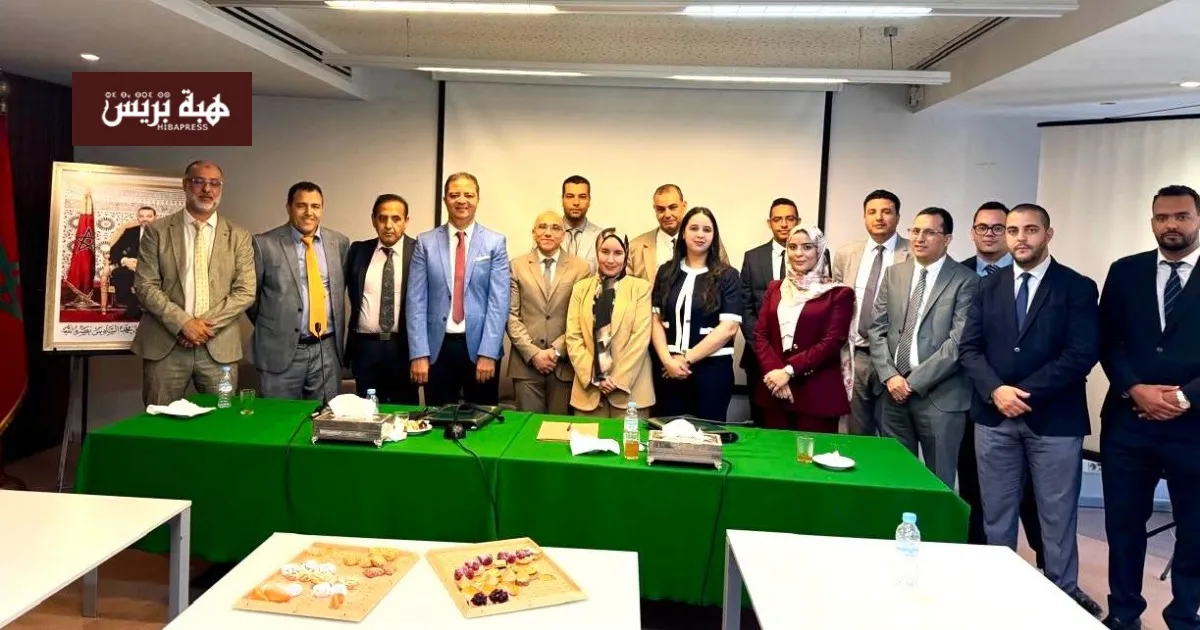
In line with the ongoing regional training program for judges within the jurisdiction of the Marrakech Court of Appeal for the year 2026, the court organized a training session on May 6, 2026, focusing on the topic: “Insights into Modern Methods and Techniques for Proving Money Laundering Crimes.” This initiative is part of the continuous educational dynamic overseen by the presidency of the Marrakech Court of Appeal, led by President Mustapha Ait Al-Hlawi, aiming to enhance the sustainable training of judges and develop their scientific and practical skills. This endeavor is designed to keep pace with the rapid transformations in the field of financial crimes and to contribute to improving the quality of judicial performance.
Professor Mohamed Amin Jabri, the First Deputy President and the individual responsible for training, played a pivotal role in leading this session. In his opening speech, he emphasized the significant importance of the topic of proving money laundering crimes, particularly in light of the recent updates brought about by Law No. 03.23. This law has reorganized mechanisms for initiating public prosecution and has strengthened the means of proof in cases of public financial crimes.
Additionally, Professor Othman Nfawi, a counselor at the Marrakech Court of Appeal, presented an in-depth scientific lecture covering the legal and practical framework of modern techniques in proving money laundering crimes. He highlighted the most important updates introduced by the new law, especially concerning the constraints on initiating public prosecutions, the adoption of oversight reports as a fundamental means of proof, and the establishment of parallel financial investigations, along with enhanced seizure and confiscation mechanisms.
The presentation also addressed practical issues arising from these provisions, particularly regarding proving the connection between the original crime and the money laundering offense, as well as the challenges associated with activating institutional roles in this field, especially under the constraints related to civil society organizations' involvement as civil parties.
This training session served as an opportunity for rich judicial discussions among the judges, during which experiences were exchanged and practical cases were discussed. This interaction aims to unify judicial interpretations and elevate the quality of judicial rulings in financial crimes.
The organization of this training session reinforces the commitment of the Marrakech Court of Appeal to instill a culture of continuous training, which is considered a fundamental driver for modernizing the justice system, enhancing judicial efficiency, and protecting public funds.
As reported by ar.hibapress.com.