Unveiling a New Species from Morocco
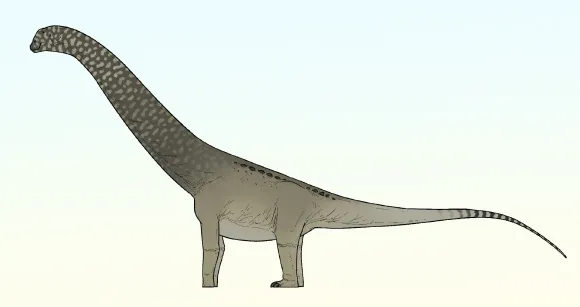
A remarkable discovery has emerged from Morocco, where paleontologists have identified a new genus and species of titanosaurian sauropod dinosaur, named Phosphatotitan khouribgaensis. This exciting find, led by Dr. Nick Longrich from the University of Bath, sheds light on the connections between African and South American dinosaur lineages. The species lived approximately 70 million years ago during the late Maastrichtian age of the Cretaceous period, a time that witnessed the final diversification of dinosaurs before the cataclysmic end-Cretaceous extinction.
Significant Fossil Findings
The fossilized remains of Phosphatotitan khouribgaensis were unearthed from phosphate deposits located at Sidi Chennane in Morocco’s Khouribga region. The discovery includes vital skeletal components such as dorsal and tail vertebrae, along with sections of the sacrum and pelvis. These fossils were preserved in a geological environment characterized by warm, shallow seas, highlighting the unique ecological settings present during the Late Cretaceous and Early Paleogene.
Intriguingly, despite its North African origins, Phosphatotitan khouribgaensis exhibits close evolutionary ties to the Lognkosauria group, primarily known from South America. This connection implies that these titanosaur dinosaurs were potentially widespread across the ancient supercontinent Gondwana before the continents separated. Alternatively, it raises the possibility of intercontinental migration across narrow oceanic barriers.
Unlike its colossal relatives such as Patagotitan, which were among the largest land animals, Phosphatotitan khouribgaensis was considerably smaller, weighing approximately 3.5 to 4 tons. This reduced size may suggest adaptive strategies to environmental pressures or geographic isolation that characterized late Cretaceous North Africa, possibly functioning as isolated 'islands.' The presence of this unique dinosaur, along with other hadrosaurids found in the region, indicates that Morocco supported a distinct endemic fauna during this period, emphasizing the complexity of dinosaur diversity prior to the end-Cretaceous extinction.
As reported by sci.news.