Exploring Cultural Diversity Through Migration
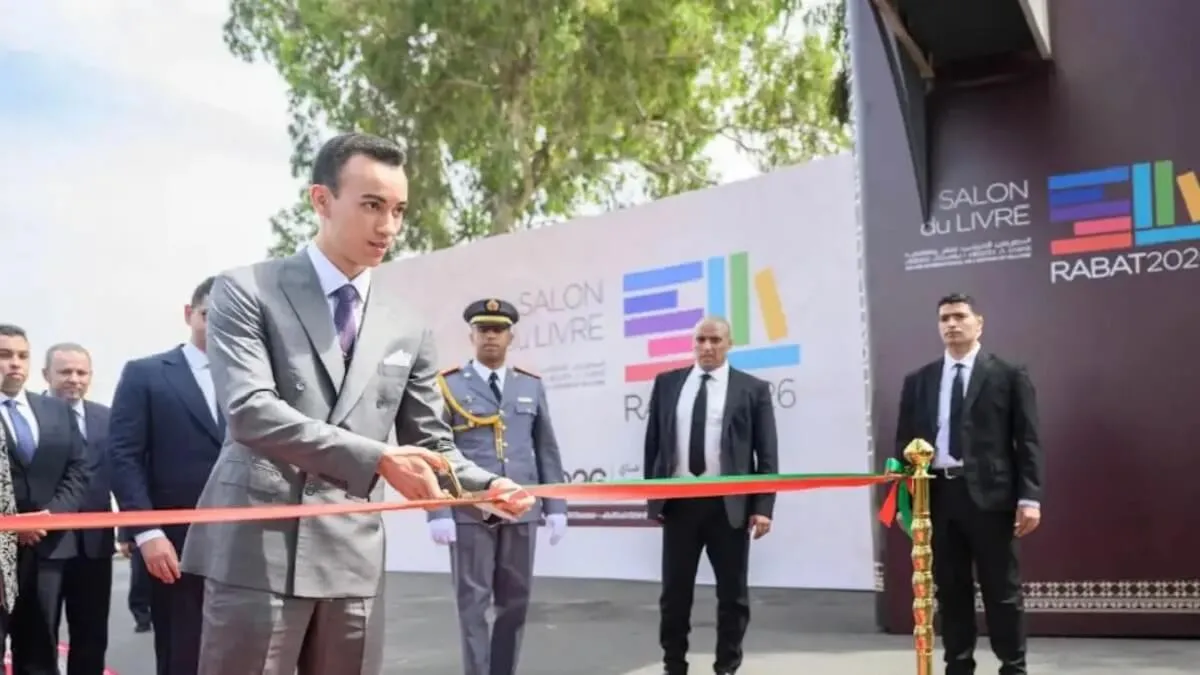
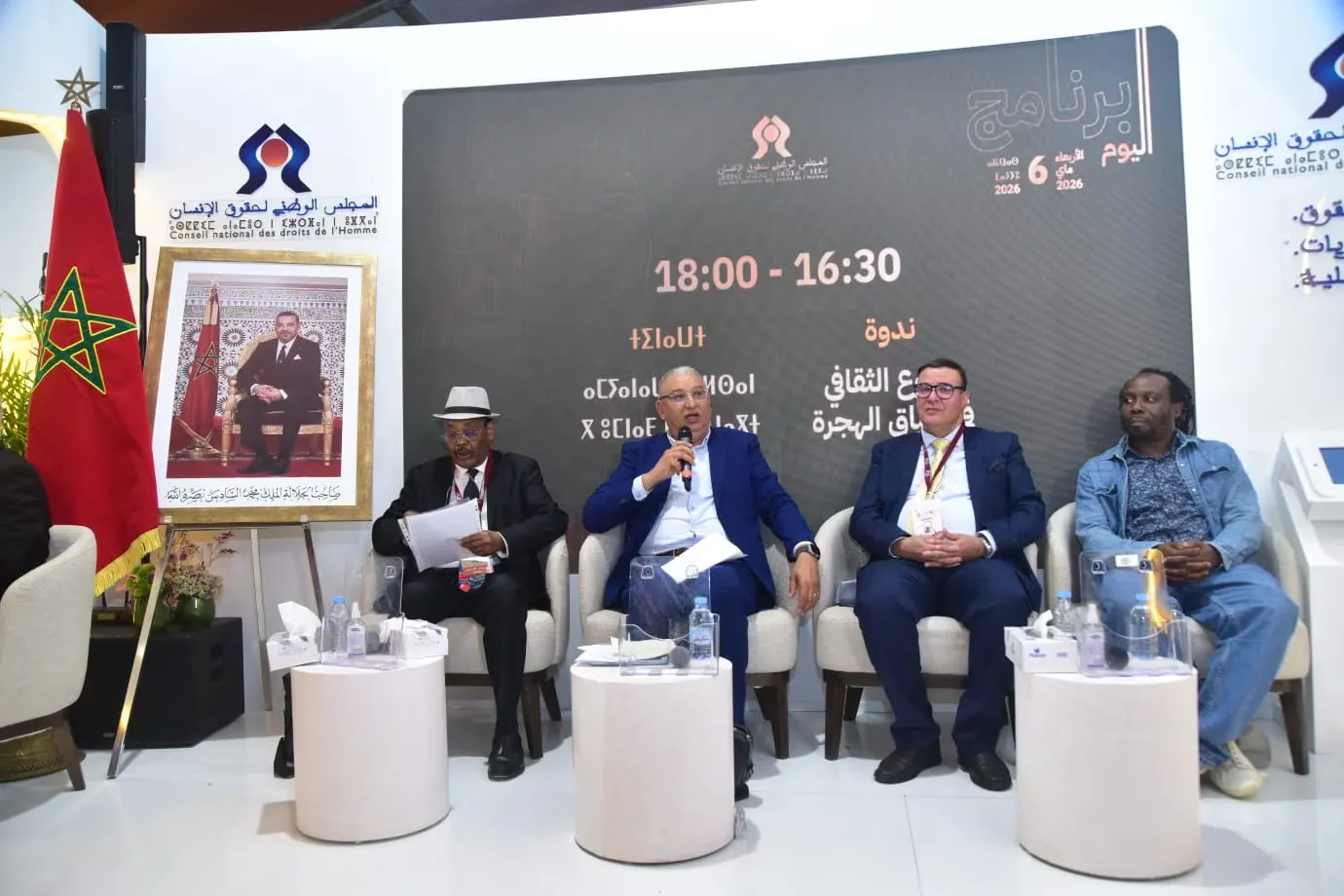
At the heart of the International Salon of Publishing and Book in Rabat, the National Council for Human Rights (CNDH) hosted a pivotal conference on May 6, focusing on a pressing question of our era: how do societies perceive encounters with others, and what impact do migratory dynamics have on various cultures? Four distinguished speakers came together to address this topic: Talha Jibril, a journalist, writer, and academic; Abderrahim Al Atri, a researcher at Mohammed V University in Rabat; Reuben Yemoh Odoi, a social activist and founder of the Minority Globe association; and Abderafie Hamdi, the director of monitoring and protection of human rights at the CNDH.
Kicking off the discussion, Abderafie Hamdi emphasized that the CNDH approaches cultural diversity from its foundational principles, linking it to universal human rights. The institution aligns itself with both international covenants regarding civil and political rights, as well as economic, social, and cultural rights, as stated in their preamble. For Hamdi, the discourse on cultural diversity is inseparable from the debate on human rights; it is through the recognition of diversity that dignity is upheld, free from any exclusion or stigmatization.
The Role of Media in Migration Narratives
Talha Jibril shared his unique perspective, which blends personal experience with professional insight. Originally from Sudan, he moved to Morocco for his studies, navigating a journey marked by significant cultural transition, which symbolizes openness to diversity and the 'other.' He articulated that "migration is not merely about crossing borders or changing addresses; it is a journey towards oneself and towards others, into a world far beyond the geography of birth." Jibril portrayed Morocco as a welcoming land capable of transforming strangers into close allies and immigrants into integral contributors to the present. This experience is reflected in his career, where he has held editorial positions at five Moroccan newspapers, a feat he describes as exceptional in the Arab world, Africa, and Europe.
On the media's role, Jibril was candid, stating that traditional media have long focused on the raw facts of migration without a genuine human narrative accompanying the phenomenon. While digital media and social networks have enabled migrants to share their stories, this shift is accompanied by significant challenges, such as the rise of fake news, superficial imagery, and the political exploitation of migration issues. He stressed the importance of professional journalists maintaining a delicate balance between factual integrity and human sensitivity, ensuring that the reporting of information also highlights its cultural dimensions. Reflecting on Barack Obama's electoral campaign, which he followed across 51 districts, Jibril lamented a regression from that initial momentum, concluding that "migration is a long poem written in sweat and blood; cultural diversity is its rhyme, adding to its beauty and longevity."
For further insights, please refer to this article: As reported by fr.le360.ma.
Abderrahim Al Atri provided a fresh perspective on the migratory phenomenon, suggesting that each situation is defined by unique configurations, including human trajectories, mobility, and symbolic systems from distinct contexts, where the host framework plays a crucial role in creating meaning. He highlighted a significant fracture: the tendency to commodify cultural diversity, often manipulated as a political resource. Drawing from Canadian writer John Porter’s concept of the "vertical mosaic," he critiqued the Canadian model, often portrayed as open but, in reality, characterized by social hierarchies where Northern populations dominate while Southern communities remain marginalized. "We are born different, and migration allows this reality to be revealed and celebrated," he stated, lamenting that migration and cultural diversity are predominantly viewed as problems today.
Furthermore, Al Atri invoked Bruno Latour’s thoughts concerning the shifts in the digital world, emphasizing that cultural diversity cannot be confined to artistic spheres alone but permeates all societal dynamics. He posed a crucial question: "Are current public policies truly equipped to handle a cultural diversity that, beyond institutional treatment, permeates the entirety of society?"
Reuben Yemoh Odoi, hailing from Ghana, provided insights from the grassroots level. As the artistic director of Minority Globe, he works alongside migrants to foster mutual understanding through artistic creation. He believes that culture is rooted in sounds and languages, and it is through listening that diversity is constructed. Within this framework, he collects and dialogues cultural expressions from various regions in Morocco, recounting his discovery of the unique nuances in the Tiznit accent during his time in Marrakech. Odoi stressed the importance of language learning as a genuine gateway to the world, noting that this approach has enabled him to secure funding, particularly from the Arab Fund for Arts and Culture (AFAC). "It is not the language that prevails, but the culture," he concluded.