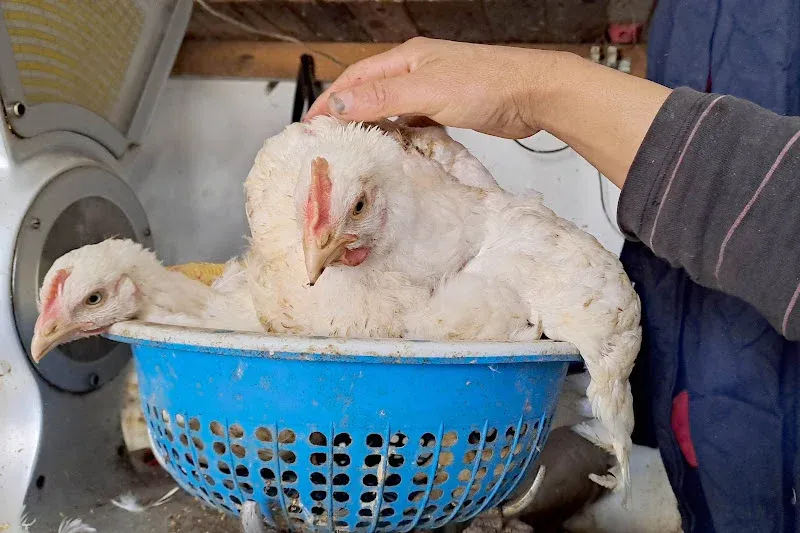
Accusations Arise as Chicken Prices Plummet
The recent decline in chicken prices in Morocco has sparked accusations among industry professionals, particularly between producers and the poultry federation. Farmers argue that the abundant production is not coincidental but rather a deliberate effort to flood the market, a claim that the Moroccan Poultry Federation (FISA) vehemently denies. The National Chicken Breeders Association previously expressed concerns over the challenges facing the meat chicken sector, noting that the price of live chickens has fallen below 7 dirhams per kilogram, while production costs hover between 15 to 17 dirhams. This situation has led to significant losses for breeders, pushing many towards bankruptcy as they hold regulatory bodies accountable for the worsening crisis due to ineffective market organization and ongoing irregularities.
Calls for Investigation and Industry Insights
Mohamed Aboud, the president of the National Chicken Breeders Association, has called for an urgent investigation into the lack of production valuation and the chaotic management practices currently plaguing the sector. He shared with Hespress that hatcheries produced massive quantities of chicks that are challenging to market under the existing disorganized conditions. This issue has been exacerbated by the expectation that the "Green Morocco Plan" would guide production towards industrial slaughterhouses for better valuation and protection, rather than relying on daily market sales, leading to an overwhelming surplus coinciding with the stagnant period following the Eid al-Adha celebrations. This surplus was further fueled by previous high prices that attracted large investors into the chicken farming sector, resulting in excessive imports of parent stock exceeding 4.5 million, with half of the sales passing through brokers, obscuring actual market figures in the absence of ministry oversight.
Aboud lamented the absence of clear production schedules indicating the true volume of chicks, which has forced producers into a grim reality where they are compelled to sell chickens for 7 dirhams or less, despite actual production costs exceeding 17 dirhams. He warned that this situation could lead to the elimination of remaining producers and the establishment of a monopoly that would impose its pricing strategies, similar to what has occurred in the red meat sector, where prices reached 150 dirhams. He cautioned that the current low chicken prices are not sustainable, predicting a scarcity within 30 to 40 days, which would allow monopolies to exploit the situation and raise consumer prices to between 25 and 30 dirhams.
In response, Youssef Al-Alaoui, president of the Moroccan Poultry Federation, questioned the logic behind producing and selling chickens immediately after Eid al-Adha, emphasizing that consumer interest and demand are primarily focused on sacrificial meats during this festive period. He noted that farmers opted not to produce at this time due to prior knowledge of market conditions, underscoring that each individual must take responsibility for their business decisions and forecasts. Al-Alaoui acknowledged that while some farmers have expanded their operations in recent years, others have chosen not to produce during this period due to market saturation. He explained that the poultry sector is open, and no one can force production or restrict it, leading to the current oversupply.
The federation, according to Al-Alaoui, is focused on laws, regulations, and financial matters. Over the past three years, producers have been officially classified as farmers, granting them tax exemptions if their turnover is below 5 million dirhams. Additionally, they have successfully lobbied for the removal of customs duties on imported raw materials like corn and soybeans to help lower production costs. In conclusion, Al-Alaoui reiterated that the federation cannot intervene in personal production decisions, nor can it prevent farmers from investing in their operations, leaving it to individuals to manage their affairs concerning chicken and chick production.
As reported by hespress.com.