The migration crisis in the Spanish North African exclave of Ceuta has reportedly been largely resolved, according to the Spanish government. Foreign Minister José Manuel Albares announced on social media platform X that almost all of the estimated 50,000 migrants who arrived in Ceuta have since returned to Morocco. This statement came in the wake of significant criticism from other European Union member states regarding the integrity of the Schengen Area. Albares emphasized that it is impossible to cross into mainland Spain without proper identification, dismissing what he termed the 'interest-driven confusion' surrounding the crisis, without directly naming any specific government. Prior to this, Italy had temporarily suspended the Schengen Agreement concerning free movement of people in response to the situation in Spain.
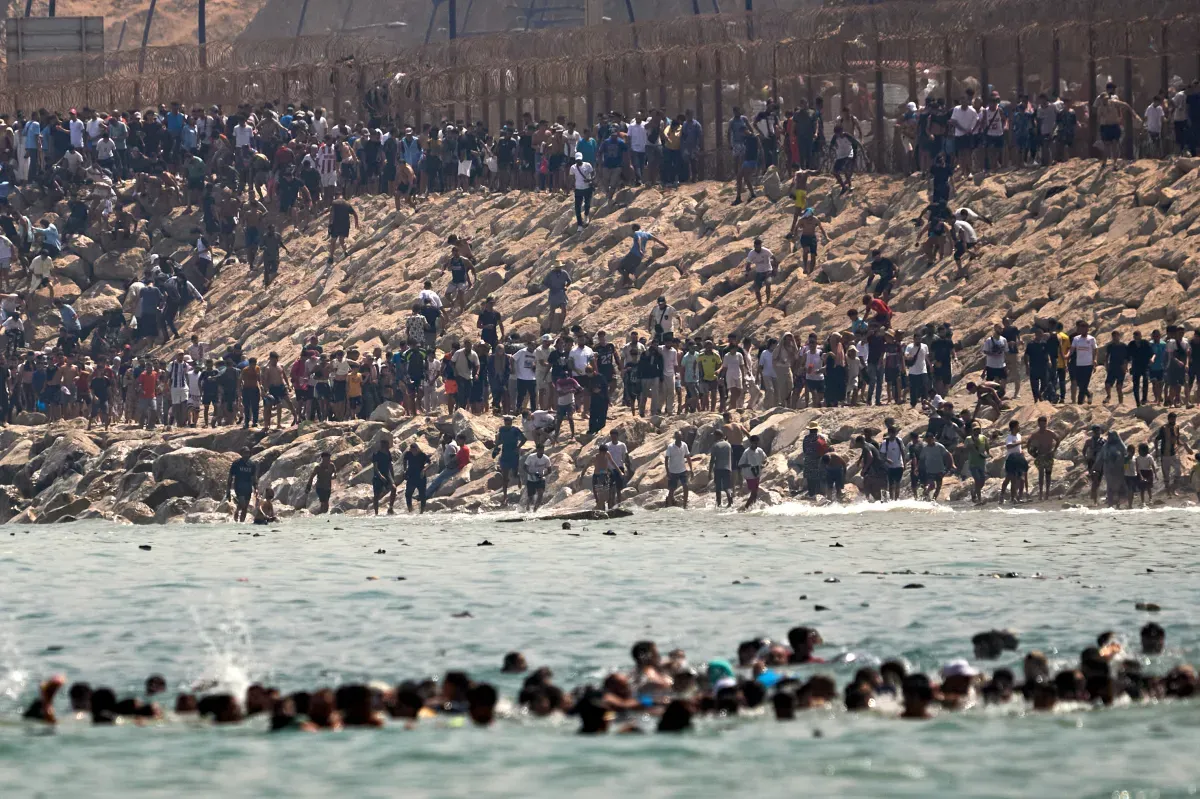
Within just 24 hours, tens of thousands of migrants had crossed the border from Morocco into Ceuta, leading to at least 57 fatalities, predominantly due to drowning while attempting to swim to the Spanish exclave. Reports from state broadcaster RTVE cited a spokesperson from the Ministry of the Interior in Madrid, indicating that many of the deceased were lost at sea during these perilous crossings.
In an effort to regain control of the situation, the Spanish government deployed 60 soldiers and 200 specialized police forces to Ceuta, as announced by the Ministry of the Interior late Thursday evening. Prime Minister Pedro Sanchez visited the Tarajal border crossing on Friday to meet with security forces and local authorities, stating that the events of the previous day constituted an 'attack' and a violation of Spain's territorial integrity. Eyewitness accounts revealed that numerous individuals from Morocco had overwhelmed the Spanish Civil Guard, with video footage capturing hundreds of migrants navigating the waters with flotation devices or breaching gates in the border fence. Additionally, unrest has spilled over into the second Spanish exclave, Melilla.
Moroccan authorities resorted to using water cannons in the border town of Fnideq to prevent further crossings.
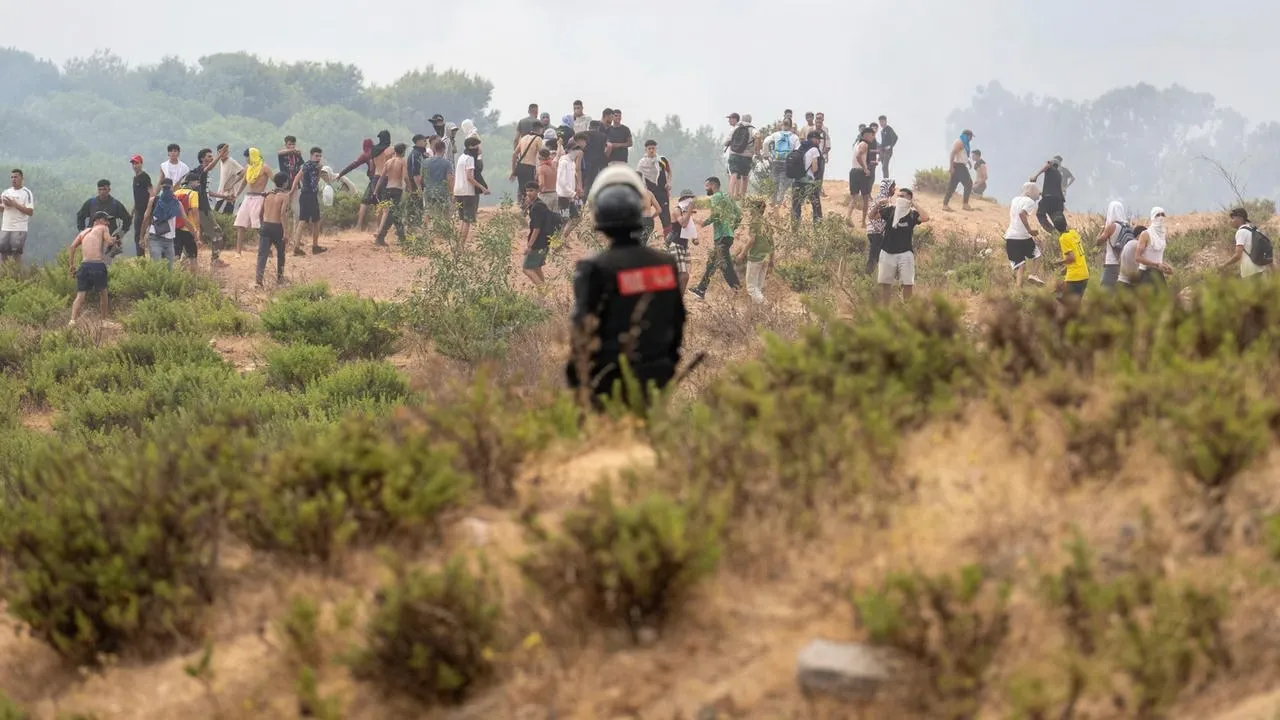
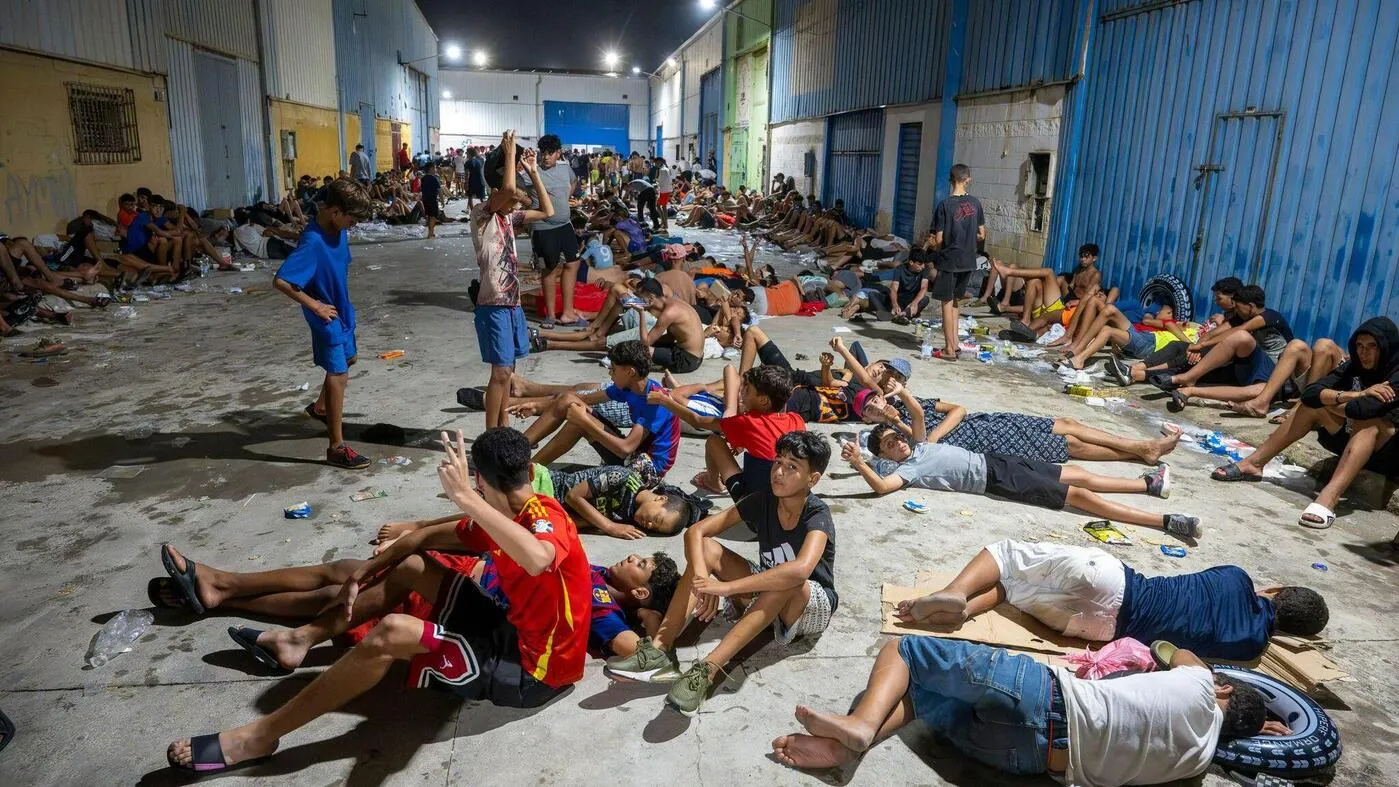
The situation at the border has escalated, with reports from Spanish media indicating that hundreds of migrants were attempting to leave Ceuta via the border dike. Violent confrontations occurred as groups tried to breach the fence, hurling stones at the stationed security forces. Thousands, primarily young men but also families with children, sought refuge in the nearby hills.
On Friday morning, the area near the border post at Fnideq presented a scene of devastation, with dozens of burned vehicles and debris littering the ground. Local shop owners, feeling inadequately protected by police, organized themselves to safeguard their properties, as many businesses had closed since Thursday.
Juan Jesus Vivas, the leader of Ceuta, had previously urged the central government to declare a state of emergency and deploy the military. In a statement on the online platform X, Prime Minister Sanchez reassured that his government was fully focused on restoring normalcy as swiftly as possible.
In Melilla, clashes were reported at the Beni Ansar border crossing, with at least three vehicles set ablaze and injuries reported among both migrants and security personnel. Approximately 400 individuals entered the region through two border crossings from Morocco, as stated by Juan José Imbroda, the president of the autonomous city, who confirmed that security forces managed to maintain control of the situation.
The events have intensified the political debate in Spain, particularly as the socialist government had recently launched a program aimed at granting legal status to around 500,000 undocumented migrants. Right-wing parties have attributed the escalation to Sanchez's policies, with opposition leader Alberto Núñez Feijóo of the conservative Popular Party (PP) labeling it a threat to national security.
One possible explanation for the sudden surge in migration is a recent ruling by Spain's Supreme Court, which stated that migrants intercepted at the border fences of Ceuta or Melilla cannot be immediately returned. The Ministry of the Interior blamed smuggler gangs for exploiting this ruling, pledging to expeditiously deport illegal entrants. No immediate comment has come from the Moroccan Ministry of Interior regarding the situation.
Fatima Zahra, a young Moroccan, recounted how she learned about the supposed opening of the Ceuta border shortly after waking up, having heard from friends in her hometown of Tangier. 'I told the people around me: We are going there to work,' she said, reflecting the sentiments of thousands who followed similar rumors to Fnideq, the Moroccan city bordering the Spanish exclave.
Many individuals reported to AFP that the rumor of an open border spread through word of mouth and online networks like Discord, although its origin remains unclear. Some voices suggest that the events may remind observers of May 2021, when about 10,000 youths from Morocco and sub-Saharan countries reached the exclave in just a few days amidst a diplomatic crisis between Spain and Morocco.
Italian newspaper La Repubblica noted that only six illegal migrants successfully reached Ceuta throughout 2025 until mid-July of this year, indicating a significant change in recent days. Reports suggest that Moroccan border controls may have been relaxed, leading to the recent influx. The Spanish newspaper El País indicated that misinformation circulating on social media may have led individuals to believe the border to Ceuta was fully open.
The EU border agency Frontex has stated that it is not currently involved in the reported incidents at the border, citing a lack of requests for assistance from the Madrid government. Frontex can provide support to member states only upon request. However, EU Migration Commissioner Magnus Brunner indicated on Thursday the EU's readiness to assist Spain, including support from Frontex, to restore order to the situation. This marks the first time since 2021 that the Spanish government has deployed military personnel to assist in border security.
As of now, the European Commission has reported no migration movements toward the European continent from Ceuta or Melilla. These two cities form the only land border of the European Union with the African continent, where attempts by migrants to enter the EU are frequent.
As reported by tagesspiegel.de.