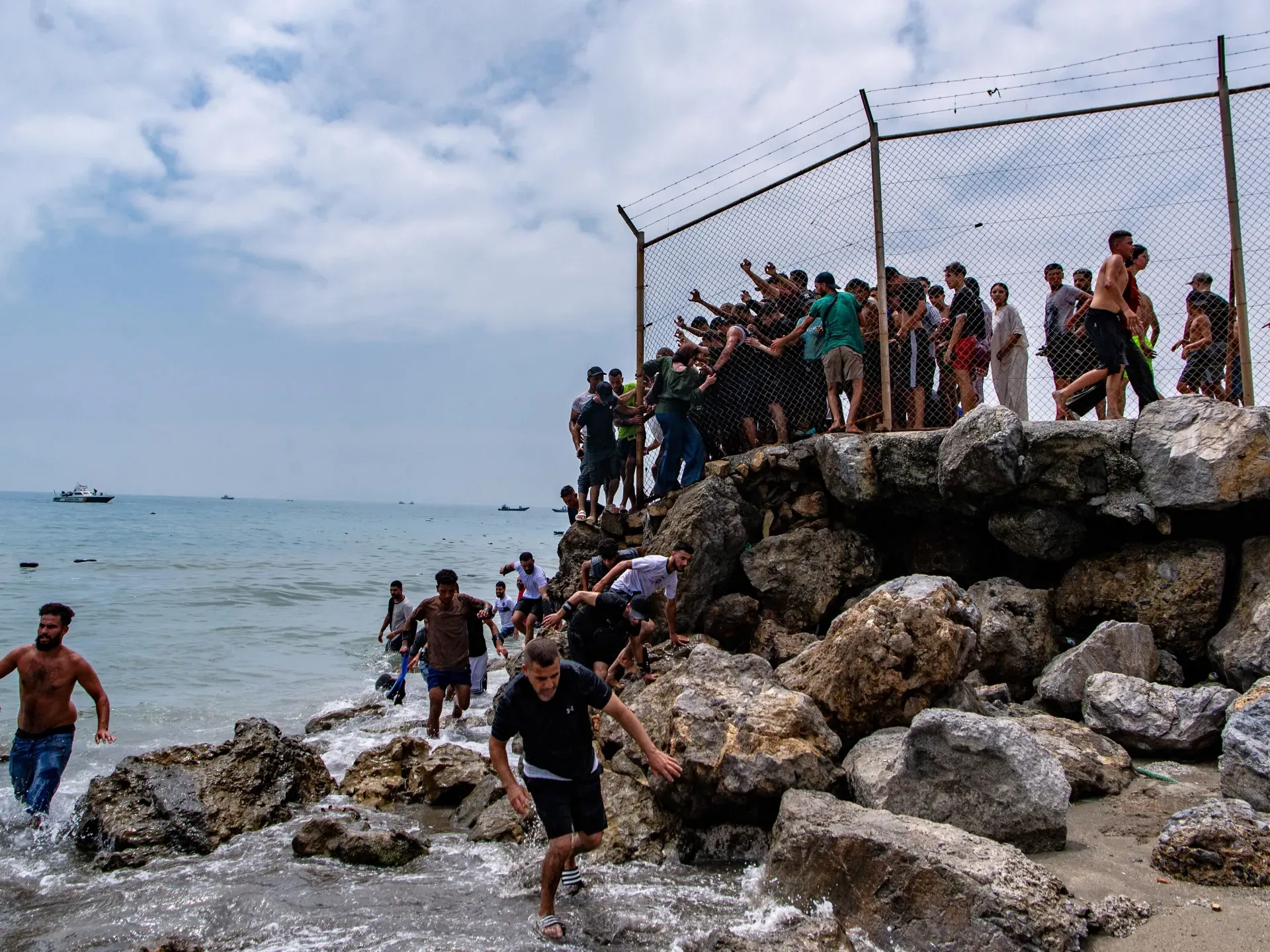
In recent days, the Spanish enclave of Ceuta has witnessed a dramatic influx of migrants, with estimates suggesting that between 1,500 and 2,000 individuals have crossed the border from Morocco in search of a better life in Europe. The situation has raised alarms among local authorities, prompting a call for urgent action to address what has been described as an "absolute humanitarian and social emergency" by regional President Jesus Vivas. The government is urging the Spanish central authorities in Madrid to deploy troops to help manage the escalating crisis at the border.
Officials reported that the surge in migrant numbers, which included hundreds arriving on a single day, has prompted the Interior Ministry of Spain to reject the idea of declaring a national emergency, asserting that such measures do not pertain to migration crises. However, they have committed to providing additional resources to manage the situation. Eyewitness accounts describe scenes of migrants cheering “Viva Espana!” as they made their way into Ceuta, many having utilized inflatable boats to navigate the waters separating Morocco from the Spanish territory.
Reports indicate that some migrants have also managed to breach land borders by scaling fences, further complicating the already delicate situation. Activists, including migrant rights advocate Zakaria Zarroqui, have drawn parallels between the current influx and a similar incident in May 2021, when approximately 10,000 migrants entered Ceuta within a few days. Zarroqui emphasized that the current conditions remain untenable, with many still attempting to cross from the Moroccan city of Fnideq.
Ceuta, along with Melilla, represents the only land border between the European Union and Africa, and both cities frequently experience spikes in attempted crossings as people seek to migrate. In light of recent events, Spain’s Supreme Court ruled earlier this month that migrants intercepted at sea cannot be returned to Morocco, a decision that has seemingly led to an increase in crossings. A spokesperson from the Guardia Civil remarked that while the influx had been gradual since the ruling, the current situation has escalated dramatically.
In response to the recent surge, Spain’s Interior Ministry is reportedly collaborating closely with Moroccan authorities to address the situation, placing blame on human trafficking networks that capitalize on the new legal landscape to facilitate undocumented migrations. Interior Minister Fernando Grande-Marlaska is scheduled to visit Ceuta to assess the unfolding crisis firsthand.
As reported by aljazeera.com.