Algeria's recent initiative to position itself as a commercial hub for the Sahel region appears to be more of a politically motivated maneuver aimed at countering its long-standing rivalry with Morocco than a genuine attempt to enhance regional trade access for the landlocked nations of Africa. The Algerian Foreign Minister Ahmed Attaf recently promoted the Mediterranean port of Djen Djen as a potential "commercial gateway" for Sahel and Saharan countries, highlighting Chad as a likely beneficiary of this arrangement.
This announcement was accompanied by familiar promises to revive the long-stalled trans-Saharan highway and to enhance fiber-optic connectivity to the south. However, the initiative closely mirrors Morocco's Atlantic Initiative, which was launched in 2023 and has already garnered explicit support from several Sahel governments. In stark contrast, Algeria's proposals have thus far been met with indifference from Sahel states, which increasingly perceive Algeria’s plans as self-serving.
Every time Rabat sets forth a concrete regional integration project, Algeria seems to hastily repackage dormant plans as strategic alternatives, and the Djen Djen proposal is no exception. Despite years of rhetoric about boosting trade, Algeria has struggled to deliver efficient north-south trade corridors or to develop a competitive export base that could adequately service Sahel markets. This shortfall can largely be attributed to Algeria's inability to match its ambitious rhetoric with tangible outcomes.
Currently, oil and gas represent approximately 90% of Algeria's exports, while its non-hydrocarbon trade with Mali, Niger, and Burkina Faso remains minimal. The Djen Djen port, situated in eastern Algeria, is poorly positioned for effective trade with the Sahel, necessitating lengthy overland routes across insecure desert areas and lacking the operational efficiency that Morocco's Atlantic ports offer. For example, Dakhla, which is the focal point of Morocco’s initiative, is geographically closer to Bamako than Djen Djen and is strategically located along established West African trade routes that are already utilized by Sahel states.
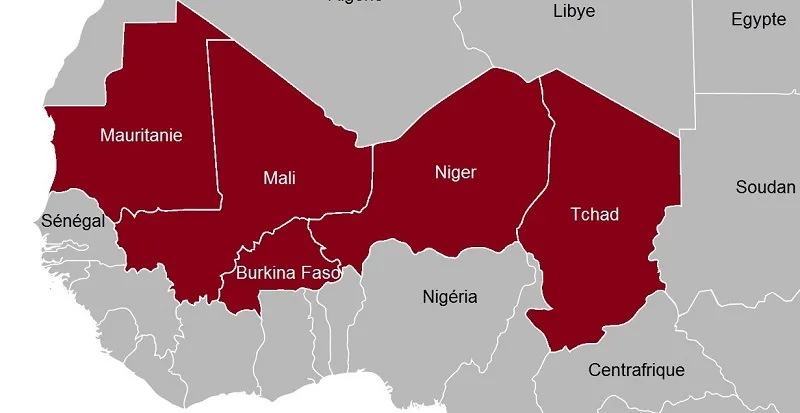
Moreover, Algeria's ports lag behind their Moroccan counterparts in terms of capacity, connectivity, and customs performance, which undermines assertions of providing effective "access to the sea." Politically, Algeria's relationships with the Alliance of Sahel States, comprising Mali, Niger, and Burkina Faso, have significantly deteriorated. Mali has withdrawn from the peace agreement brokered by Algiers, accusing Algeria of supporting terrorist and separatist groups. In a further escalation, Mali denounced Algeria after the Algerian military shot down a Malian drone near the border, leading to a formal complaint to the International Court of Justice.
In solidarity with Mali, both Niger and Burkina Faso have recalled their ambassadors from Algiers, prompting Algeria to respond with retaliatory diplomatic measures, including the closure of its airspace. Such confrontations starkly contrast with Morocco's diplomatic approach, as Rabat has maintained open lines of communication with the new authorities in Mali, Niger, and Burkina Faso. The foreign ministers of Sahel nations have repeatedly endorsed Morocco’s Atlantic initiative, viewing it as a pragmatic approach devoid of ideological or political strings.
Algeria faces further contradictions regarding human rights issues within the Sahel. International and regional NGOs have documented the mass expulsion of tens of thousands of migrants from Algeria into northern Niger in 2024 and 2025, often abandoning them in desert areas without food or water. This brutal practice has led Niger to summon Algerian diplomats multiple times to protest what it describes as violent and unlawful pushbacks, exacerbating tensions in an already strained relationship.
Algeria cannot simultaneously advocate for trade integration while persecuting citizens from Sahel countries. The southern regions of Algeria and the northern Sahel remain vulnerable to jihadist groups, trafficking networks, and cross-border smuggling. Consequently, Sahel authorities have tightened controls on routes linked to Algeria, further eroding trust in Algerian-based trade corridors. In such a precarious environment, discussions about free trade zones and open ports seem disingenuous.
Perhaps the most telling aspect of Algeria's economic stance is its lack of participation in the World Trade Organization, along with heavy import restrictions and a reliance on subsidies that distort market dynamics. Sahel governments are left questioning how Algeria can credibly propose free-trade regimes to its neighbors when it struggles with domestic supply shortages and rigid trade practices.
In a related geopolitical development, Russia recently hosted its first official military consultations with the defense chiefs of Burkina Faso, Mali, and Niger as part of the newly formalized Alliance of Sahel States (AES), further complicating the dynamics in the region. These high-level talks in Moscow concluded with commitments that signal an increasing Russian presence in Africa.
In summary, while Algeria attempts to project itself as a regional trade leader, its strategies appear more focused on countering Moroccan influence than on fostering genuine economic cooperation in the Sahel. The efficacy of Algeria's initiatives will ultimately depend on its ability to address its internal contradictions and build trust with its neighbors.
As reported by northafricapost.com.