The NEET Crisis Among Youth in Morocco
On April 14, 2026, a pressing report highlighting the situation of NEET (Not in Employment, Education, or Training) youth in Morocco was unveiled in Rabat. This challenge, prevalent not only in Morocco but across the Middle East and North Africa, reveals that approximately one in three young individuals aged 15 to 29 is affected, with the rates alarmingly higher among young women. Disturbingly, a significant portion of these NEET youth are categorized as inactive rather than unemployed, indicating persistent barriers that hinder access to economic and social opportunities.
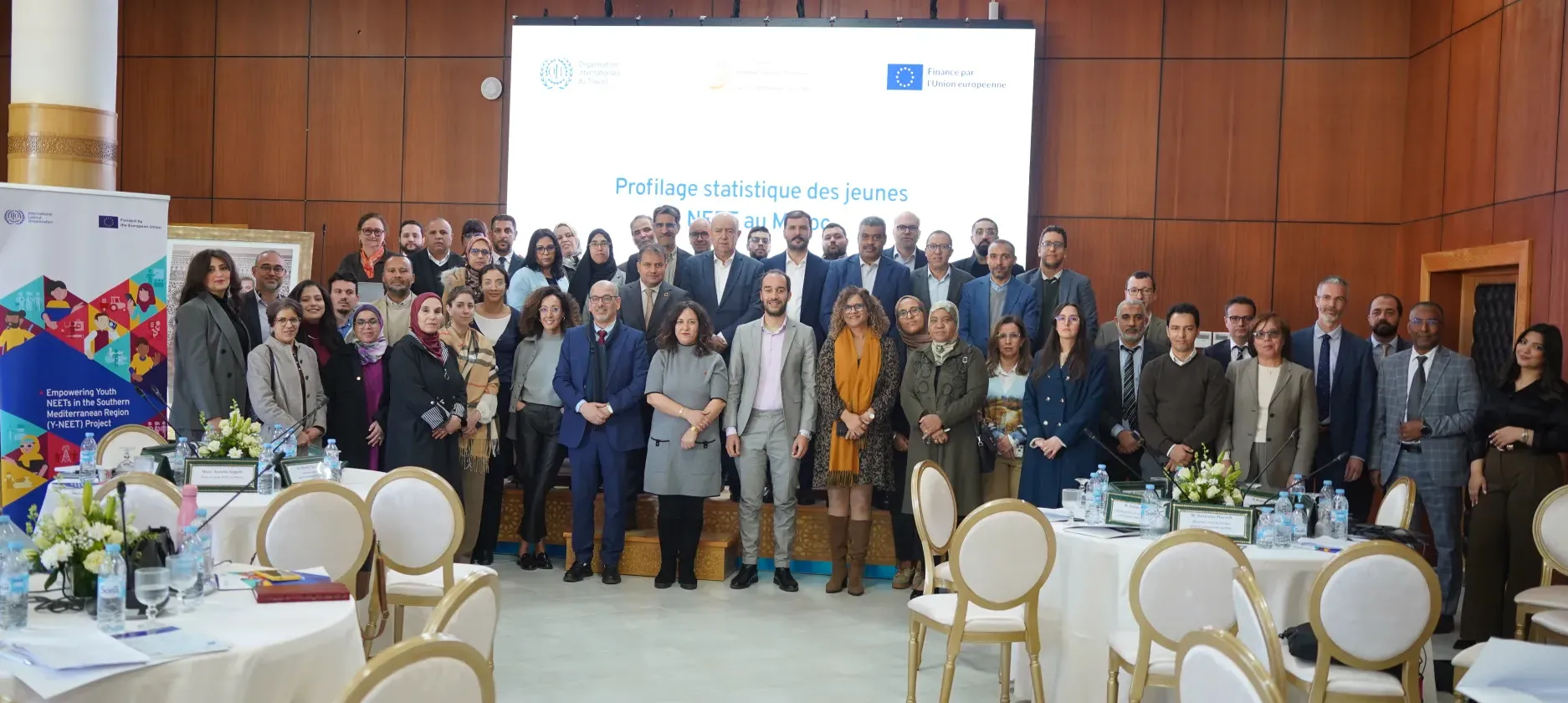
The report was launched during a national workshop organized by the High Commission for Planning (HCP), in collaboration with the International Labour Organization (ILO) and the European Union. The event attracted participants from public institutions, technical and financial partners, and civil society organizations, all gathering to discuss the findings based on national employment survey data collected by the HCP. This comprehensive analysis aims to deepen the understanding of the profiles and experiences of affected youth, highlighting critical differences based on gender, educational level, geographic location, and access to support services and employment opportunities.
Understanding the Numbers: Key Findings
Currently, there are 2.9 million Moroccan youths aged 15 to 29 who are neither employed, enrolled in education, nor in training programs. Behind this staggering figure lie profound disparities; nearly 72% of NEET youth are women, and close to three-quarters lack any qualifying diploma. Alarmingly, almost half of these individuals are between the ages of 25 and 29, indicating a heightened risk of remaining NEET after the critical transition period at age 24, which is pivotal in moving from school to the workforce. Regional disparities are also evident, with NEET rates varying significantly from 28% to nearly 40%, underscoring the need for tailored responses that consider local contexts and realities.
This initiative goes beyond mere diagnostics; it aims to enhance the utilization of national statistical data to inform public action. The discussions held during the workshop provided an opportunity to delve into the operational implications of these findings, particularly regarding the coordination of interventions, customization to specific profiles, and the need for coherent responses.
“This report marks a significant step forward in understanding the realities faced by NEET youth in Morocco. It sheds light on the deep structural fractures that permeate Moroccan youth and confirms that the NEET phenomenon cannot be approached uniformly. The discussions have generated a strong call for a scaled-up public response, grounded in detailed data and differentiated solutions,” stated Mr. Ayache Khellaf, Secretary General of the HCP.
Mr. Toufik Cherradi, a member of the Human Capital Commission of the General Confederation of Enterprises of Morocco (CGEM), emphasized, “The challenges associated with integrating NEET youth demand structural responses to better align the needs of businesses with available profiles. We believe in the crucial role of training, particularly through apprenticeship models and Delegated Management Institutes, which bridge the gap between education and the private sector. Our commitment is to place youth employability at the forefront, making them the driving force of tomorrow and a lever for growth.”
Mr. Eric Trotemann, Head of Cooperation at the EU Delegation to Morocco, added, “The issue of NEETs is concerning both in the European Union and Morocco, and it requires concrete actions from public authorities. For Morocco, we believe that this analysis will effectively contribute to fostering a shared understanding, enhancing dialogue among stakeholders, and ultimately improving the effectiveness of public policies.”
Ms. Leila Benhima Cherif, President of the Heure Joyeuse Association, noted, “The pragmatic approach of organizations supporting NEET youth is based on close co-construction with businesses, aiming to train young individuals who meet market demands and enhance the competitiveness of Moroccan companies. This involves accessible training tailored to various educational backgrounds and a clear definition of prerequisites to ensure a better match between supply and demand.”
The profiling results will inform discussions on the evolution of public employment services and contribute to the national debate concerning the targeting, coherence, and impact of public policies aimed at benefiting youth.
As reported by hcp.ma.