Shifting Perspectives on Ceuta and Melilla
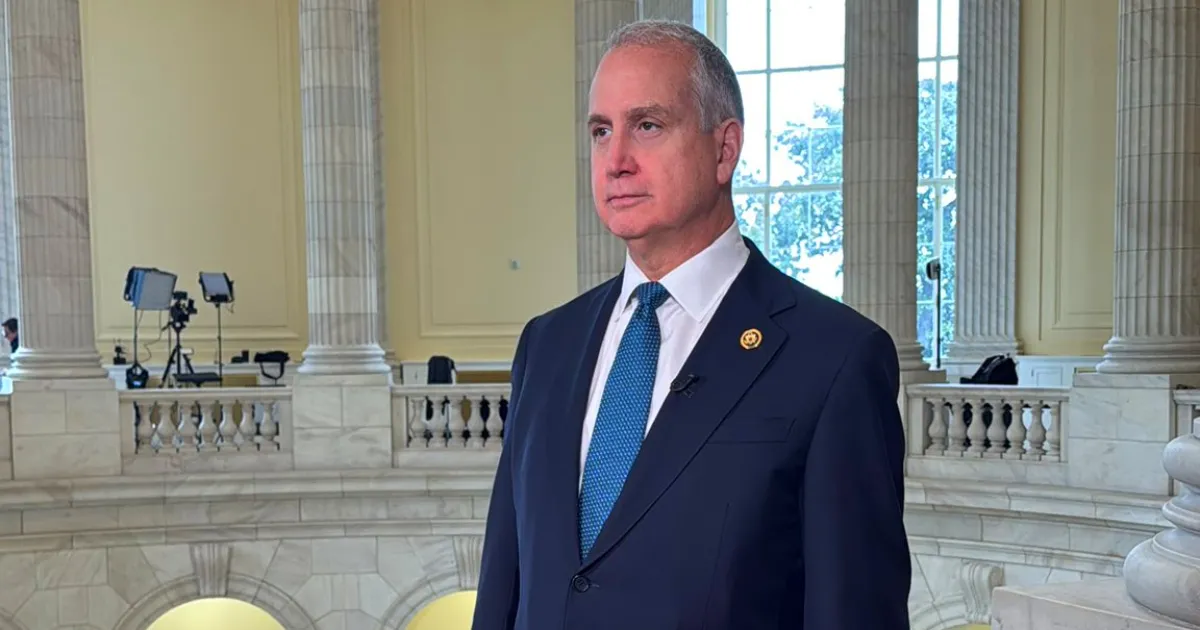
In a recent interview with El Español, Republican representative Mario Díaz-Balart made a provocative assertion that the Spanish territories of Ceuta and Melilla are situated on Moroccan soil. He emphasized that these two cities, located on the northern coast of Africa, do not belong to Spain geographically but rather to Morocco. This claim highlights a historical context dating back to the fifteenth century when Spain established control over both cities during the Marinid dynasty in Morocco. Despite Morocco's ongoing historical claims to these territories, Spain has consistently resisted relinquishing its authority, leading to a complex and tense diplomatic scenario.
Díaz-Balart's comments come at a time of strained relations between U.S. President Donald Trump and Spain’s Prime Minister Pedro Sánchez, particularly due to foreign policy disagreements concerning Iran and issues related to military cooperation. As a member of Congress with significant influence over foreign aid and defense budgets, Díaz-Balart’s remarks are indicative of broader tensions between the U.S. and Spain, especially regarding Sánchez’s foreign policy stance. He criticized Sánchez’s approach to alliances with the United States, suggesting that if cooperation continues to deteriorate, Washington may begin to seek alternative partnerships.
Implications for U.S.-Spain Relations
Díaz-Balart expressed concern over the potential ramifications of current policies on the long-standing military collaborations between the U.S. and Spain, which include strategic military bases in southern Spain such as Rota and Morón. These bases play a critical role in NATO operations and significantly contribute to the local economy. The situation intensified recently after Spain imposed restrictions on its airspace for specific U.S. military flights connected to operations involving Iran, further complicating the diplomatic relationship.
The political climate in Spain has been charged in response to Díaz-Balart's comments, as both the ruling coalition and the conservative opposition unite in defending Spain's sovereignty over Ceuta and Melilla. Spanish officials assert that these cities are integral parts of Spain and the European Union, countering claims made by Díaz-Balart and others. Notably, Díaz-Balart has cultivated strong ties with Morocco in recent years, supporting legislation that recognized the Polisario Front as a terrorist organization and promoting U.S.-Moroccan relations through his involvement in a congressional caucus.
In Washington, there is a growing acknowledgment of Morocco's position regarding Ceuta and Melilla, extending beyond just politicians. Recently, Michael Rubin from the American Enterprise Institute called for the U.S. to officially recognize these cities as Moroccan territory, framing Spain as an occupying power. He cited the precedent set by Donald Trump’s acknowledgment of Morocco’s sovereignty over the Sahara as a legal and diplomatic foundation for a potential shift in U.S. policy towards Ceuta and Melilla. Collectively, these developments reflect an emerging trend among certain U.S. officials and policy influencers advocating for Morocco's claims and reconsidering the status of these two contentious cities.
As reported by barlamantoday.com.