Rising Prices Create Burden for Citizens
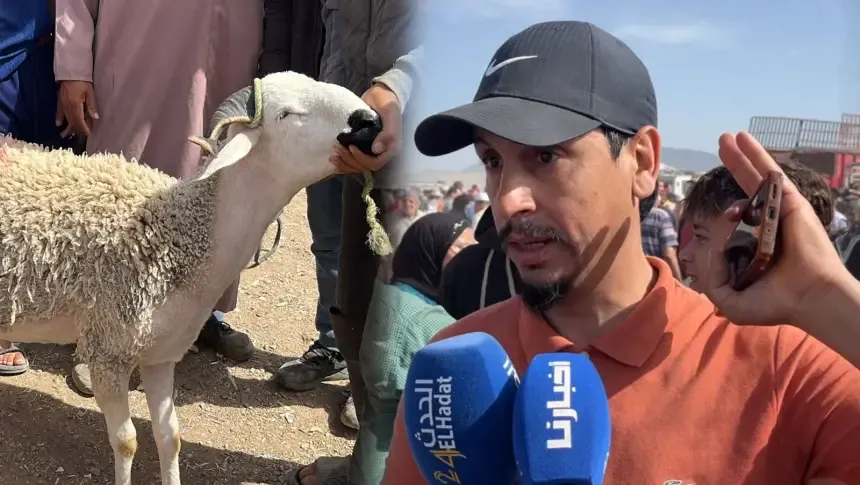
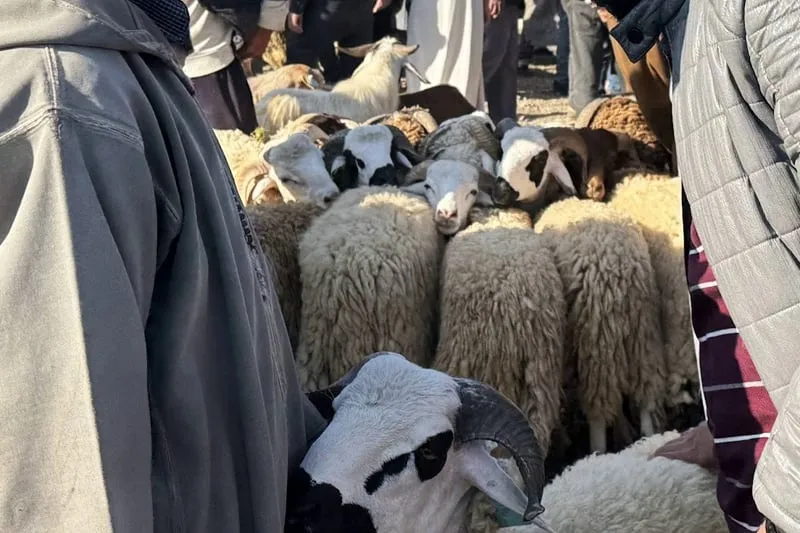
As the approach of Eid al-Adha draws near, the weekly markets and 'Rahabi' in the Marrakech-Safi region are experiencing an unprecedented wave of price increases, primarily reflected in the exorbitant prices of sheep. This alarming situation is directly threatening the purchasing power of citizens, particularly those from vulnerable and low-income groups. Many residents have expressed their shock at the soaring prices of sheep, which they note have skyrocketed from the usual range of 1000 to 1500 dirhams in previous years to an astonishing 3000 dirhams this year. Even those with a budget of around 3500 dirhams find themselves limited to purchasing only a subpar sheep, which does not justify its high price. Meanwhile, the prices of average-quality sheep have surged to between 4500 and 6500 dirhams, while top-quality sheep now cost 9000 dirhams and above, ultimately leaving many individuals returning home empty-handed.
Government Inaction and Market Discrepancies
In light of these circumstances, numerous citizens have postponed their purchases of sacrificial animals until the final days leading up to the holiday, hoping for a decrease in prices and a resolution to the chaos in the markets. Regrettably, this has not been the case, as prices have continued to escalate in the last moments, leaving them bewildered and unable to make purchases. The Moroccan Forum for Human Rights in the Marrakech-Safi region has expressed its profound discontent through a strongly-worded statement, highlighting the stark and perplexing contradiction between the official statistical data and the lived reality within the livestock markets of the region. In the statement signed by the regional coordinator, Hafid Abdelmajid, it was stated that the ongoing inflation of prices at record levels undermines public support programs and policies designed to offer social support, failing to reflect the announced statistics regarding the national livestock population, which is said to be around 9 million heads, against a national consumption requirement that does not exceed 7 million heads at most.
The rights organization raised questions about whether regulatory sectors possess accurate data and genuine controls to manage supply and demand and protect the internal market, or if the situation is primarily influenced by the overwhelming presence of speculation and monopoly lobbies that have become more powerful than monitoring and intervention mechanisms, controlling price quotes arbitrarily at the expense of the average consumer. In response to this situation, the forum has condemned what it deems a clear governmental failure to regulate the weekly markets and to control the sales channels, as well as to put an end to illegal speculation concerning a vital commodity tied to the identity and religious practices of Moroccans.
Among its procedural demands, the rights organization has urged the relevant central authorities to conduct a thorough and comprehensive investigation to ensure transparency regarding the distribution channels of subsidized and imported sheep, calling for the identities and actual beneficiaries of public support funds to be revealed to the national public. Furthermore, the statement emphasized the urgent and strict activation of mixed field monitoring committees in the markets and the rigorous application of the law against speculators and monopolists, stressing that the right to access reasonable prices that align with the true purchasing power of Moroccans is an integral part of the right to a dignified life, which executive institutions are fully responsible for safeguarding and protecting against greed.
As reported by al3omk.com.