
The recent archaeological discovery in an ancient quarry in Casablanca, Morocco, has ignited a lively discussion surrounding human evolution. Fossils unearthed from Thomas Quarry I, dating back an impressive 773,000 years, suggest a population that is remarkably close to the origins of our species. This groundbreaking research has been published in the prestigious journal Nature.
Among the remarkable findings at Thomas Quarry I are several human remains, including jaws, teeth, and vertebrae, which hold considerable evolutionary significance. The importance of this discovery lies in the blend of both archaic and modern traits exhibited by this fossil assemblage, providing invaluable insight into our evolutionary past.
Notably, this unique combination of characteristics places these individuals near the divergence point that separated the African lineage leading to Homo sapiens from the Eurasian branches, including Denisovans and Neanderthals. The team of archaeologists considers these remains as a direct gateway to a poorly documented phase of human evolution in Africa, offering a glimpse into our distant ancestors.
The sediments within the cave retain evidence of the Brunhes-Matuyama magnetic reversal, a key factor that allows archaeologists to date the site with great precision, pinpointing it to around 773,000 years ago. Africa has long presented a significant gap in the fossil record from one million to 600,000 years ago, and this discovery helps to fill that void. Importantly, the remains discovered do not belong to modern humans but to archaic forms that are closely related to the evolutionary trunk that would eventually give rise to various later human branches.
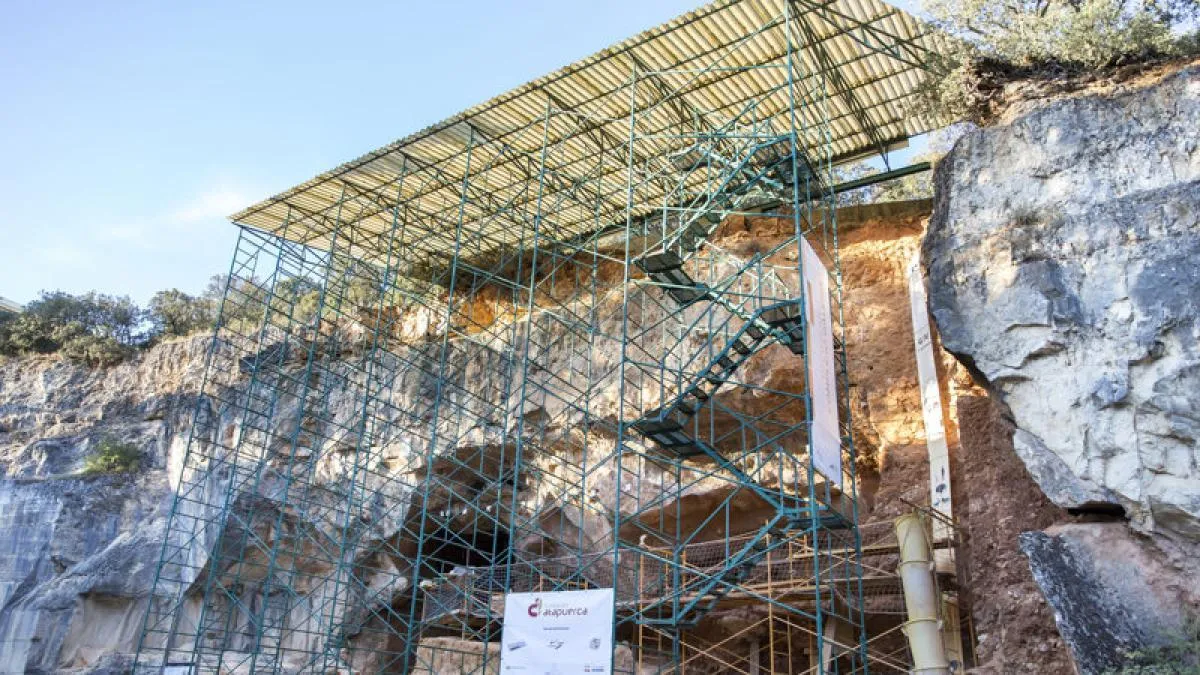
Researchers urge caution in labeling these remains as the last common ancestor of all involved lineages. However, comparisons to the Atapuerca site are inevitable, as both locations preserve fossils of Homo antecessor that are of similar age and immense evolutionary importance. The connection between Casablanca and Atapuerca raises intriguing possibilities about ancient interactions between Africa and Europe via the Strait of Gibraltar, although conclusive evidence is still lacking.
This significant finding allows experts to gain a fresh perspective on human evolution, suggesting that our ancestral populations intermixed, coexisted, and in some cases vanished over hundreds of thousands of years across diverse regions of the globe. Such discoveries continue to enrich our understanding of the complex tapestry of human ancestry.
As reported by mundodeportivo.com.


