Morocco has emerged as the leading industrial economy in Africa, propelled by substantial investments and attractive incentives designed to draw foreign investors. This industrial boom has made manufacturing the largest employer within the Moroccan economy, showcasing the country's strategic positioning and favorable trade agreements that facilitate access to various markets. However, this rapid industrialization has raised concerns among European nations, particularly regarding the growing presence of Chinese industries in Morocco. China is leveraging Morocco’s trade exemptions to circumvent European restrictions on its products, leading to significant geopolitical discussions.
A recent report from the African Development Bank highlights that Morocco is set to surpass South Africa, becoming the largest industrial economy on the continent by 2025. This achievement is attributed to Morocco's focus on product development, diversification of exports, and a commitment to growth policies. The report underscores that while South Africa has historically been a strong industrial player, it is facing a continuous decline in its competitive edge, thereby allowing Morocco to take the lead in Africa's industrial sector.
According to an April report by the World Bank, Morocco has the potential to create an additional 1.7 million jobs by 2035, and up to 2.5 million by 2050, which could result in nearly a 20% increase in real GDP compared to current levels. The World Bank notes that while Morocco's economy has made significant strides in recent years, it requires further reforms to enhance growth. These reforms should aim at ensuring more effective and competitive market access, fostering vibrant businesses, improving public investment efficacy, and creating more inclusive job markets.
Ahmadou Mustafa Ndiaye, the World Bank's regional director for the Maghreb and Malta, remarked that Morocco has established a solid foundation. With the policy recommendations outlined in the growth and job creation report, Morocco is poised to generate millions of jobs, deepen private investment, and create genuine opportunities for women and youth.
The Moroccan private sector is identifying medium-term investment opportunities that could serve as a robust leverage for private investment in four high-potential sectors: decentralized solar energy, low-carbon textile manufacturing, valorization of argan products in cosmetics, and marine aquaculture. The latest official industrial data for the Moroccan industry shows significant growth, with the total turnover for the sector reaching 898 billion dirhams, marking a remarkable 9% increase from 2023.
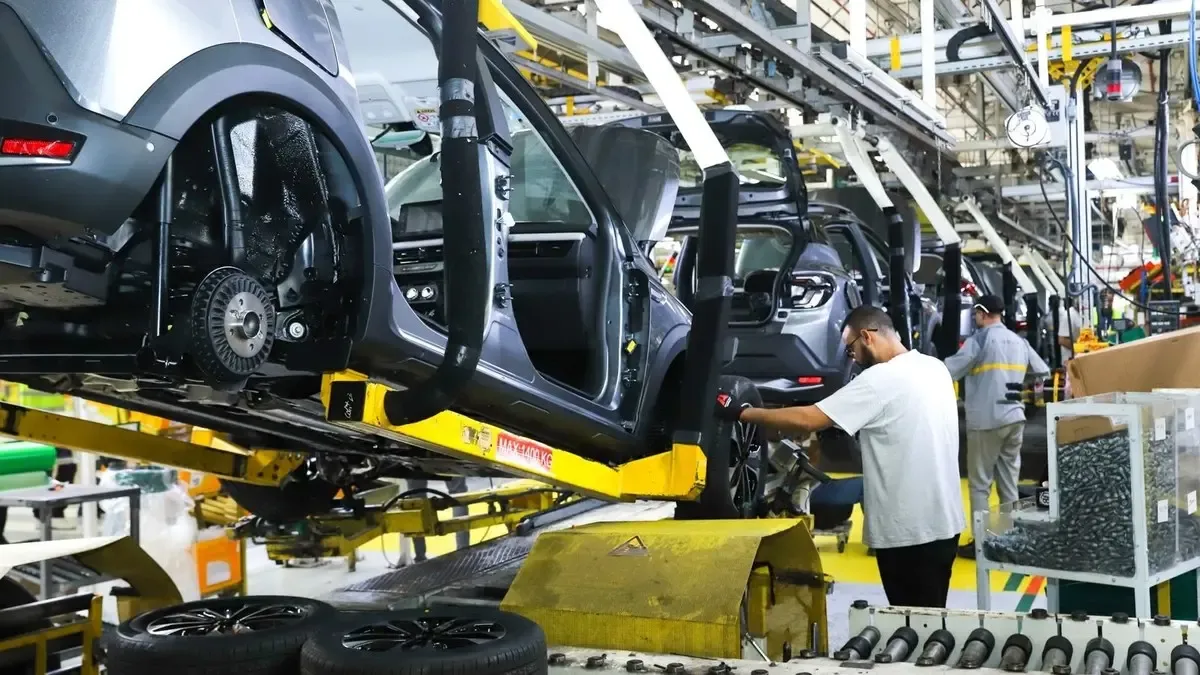
In addition, industrial production in Morocco rose by 12% to reach 842 billion dirhams, while industrial value added increased by 11% to 240 billion dirhams. Furthermore, the sector has experienced an unprecedented surge in industrial investments, soaring by 30% to 90 billion dirhams. The industrial sector now employs over a million people, with the total number of jobs surpassing 1.038 million, including 42,710 jobs added in 2024. The automotive industry has emerged as the largest export sector in Morocco, generating approximately 196 billion dirhams in revenue and providing over 250,000 jobs.
Companies operating in Morocco benefit from investment incentives, including five-year tax exemptions, a young workforce, and the use of renewable energy to reduce carbon fees, alongside a wide network of free trade agreements that provide access to over 2.5 billion consumers across nearly 50 agreements with countries including the European Union and the United States.
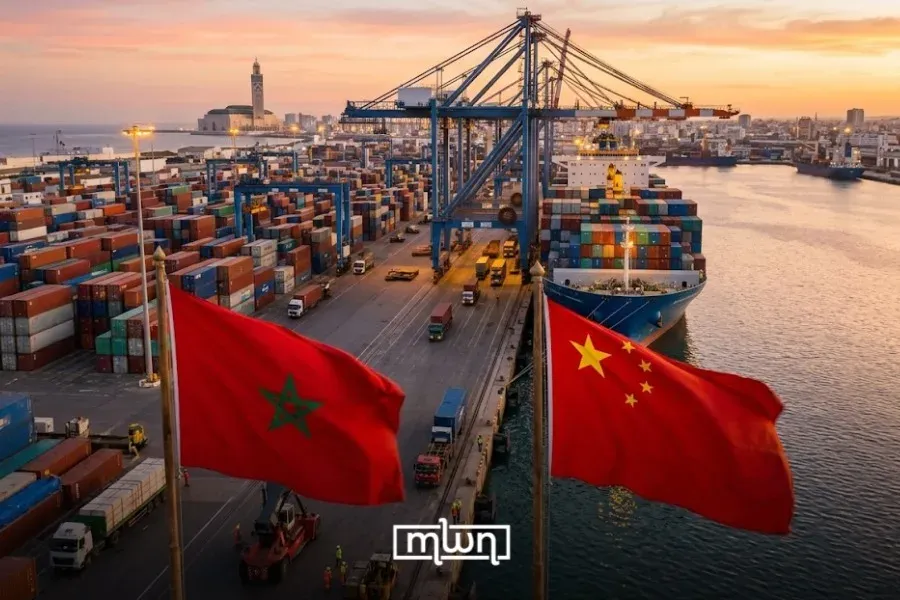
Morocco's industrial strategy aims to enhance integration into global supply chains rather than circumvent markets, addressing European concerns over Chinese expansion in the country. Consultancy data indicates that since the COVID-19 pandemic, Morocco has attracted approximately $6 billion in Chinese investments, with a noticeable uptick in investment delegations from China.
Moroccan officials have stated that the country aims to establish a comprehensive value chain capable of producing up to 500,000 electric vehicles annually by the end of 2026. However, rising European concerns suggest that substantial Chinese investments in Morocco could turn the nation into a platform for flooding the European market with subsidized industrial goods, thus threatening the competitiveness of European manufacturers and intensifying pressure on the continent's industrial base.
In the vicinity of Tangier, northern Morocco, the construction of a significant Chinese industrial expansion is accelerating, transforming 500 hectares of agricultural land into the "Mohammed VI Tangier Tech City," which is attracting a growing number of Chinese companies specializing in automotive components, from brake systems to electric vehicle batteries, in a move aimed at supporting Europe’s transition to electric vehicles.
Nevertheless, this expansion has sparked increasing alarms in the European capital, with EU officials expressing concerns that the billions of dollars Chinese companies plan to invest in Morocco could turn the country into a launchpad for heavily subsidized goods, threatening to flood European markets. EU Trade Commissioner Maroš Šefčovič noted that China's investments in Morocco reflect Beijing's efforts to address domestic industrial overcapacity through "re-exporting" products via trading partners to Europe, stating, "This has become a significant issue for the European economy."
The most pressing challenge for the European Union is determining whether to classify Morocco as part of the "European industrial sphere" under new legislation aimed at protecting the European industrial base. If these policies are implemented, restrictions could be imposed on public procurement of vehicles and industrial products based on the percentage of European content in manufacturing.
Brussels seeks to tighten trade protection tools in response to what it perceives as "indirect circumvention" of tariffs, whether through Morocco or other partners. The EU has already imposed tariffs of up to 45% on Chinese electric vehicles, while estimates from the Organisation for Economic Co-operation and Development suggest that China provides industrial support ranging from three to eight times the average in member countries, often through difficult-to-trace soft loans.
Previously, the European Commission ruled that aluminum wheels imported from Morocco were unfairly subsidized, either from Rabat or via the Chinese "Belt and Road Initiative," reflecting the complexity of the overlap between legitimate investment and attempts to circumvent trade rules.
In the hills surrounding the Tangier port, new industrial facilities are rapidly emerging within the industrial complex, where flocks of sheep still graze near the high walls of the "Tanger Tech City" economic zone, attracting Chinese factories producing automotive components. The Sentury Tire factory is already operational, and a plant for BTR New Material Group, the world’s largest supplier of battery anodes, is under construction as part of the extensive expansion of Chinese companies in the area.
Other Chinese firms have also announced investment plans, including APG, a brake systems specialist, which will open a $70 million factory, aiming to integrate local labor with Chinese technology and supplies. Junji Kai, the project director, emphasized that these investments allow for synergy between Moroccan, Chinese, and European companies, asserting that "proximity to the European market provides a competitive advantage in terms of costs and supply chains."
Chinese companies participating in an investor conference last week in Casablanca, Morocco's largest city, affirmed that Morocco is a key hub in European automotive supply chains. Major European manufacturers such as Renault and Stellantis, which owns Peugeot, have significant factories in Morocco, complicating any potential trade defense actions. Mehdi Laraki, president of the Moroccan-Chinese Business Council, noted that delegations of potential Chinese investors are visiting Morocco at a rate of two to three delegations weekly since the onset of the COVID-19 pandemic. These free trade agreements are a major draw for Chinese companies, according to Fitch Solutions, which noted in a report this year that
As reported by alarabiya.net.