
As the global focus transitions from humanitarian assistance to the physical reconstruction of Gaza, Morocco is poised to emerge as a significant contributor to this vital process. Recent engagements with Palestinian authorities indicate Morocco's potential involvement in crucial sectors such as housing, infrastructure, and urban planning, leveraging its extensive experience in reconstruction.
Morocco is not only participating in international discussions concerning the future stabilization of Gaza post-conflict but is also contemplating the inclusion of its military personnel in a multinational force. This strategic move would enhance Rabat's influence during the post-war period, facilitating the necessary security conditions for restoring essential services and initiating extensive civil reconstruction projects.
Transitioning from Aid to Reconstruction in Gaza
Under the leadership of King Mohammed VI, Morocco is entering a new phase in its approach to Gaza, evolving from merely providing humanitarian aid and stability support to actively engaging in the physical reconstruction of the Palestinian territory. This shift presents Morocco with both significant challenges and opportunities to utilize its expertise in housing, infrastructure, and public services within a region that is in dire need of reconstruction.
On August 29, 2026, a pivotal meeting took place between the Palestinian Minister of Public Works and Housing, Ahed Bseiso, and the Moroccan Ambassador to Palestine, Abderrahim Meziane. This meeting aimed at exploring how Morocco could mobilize its expertise in key areas like housing, transportation, and urban planning to assist in rebuilding the devastated regions of Gaza. For Morocco, this transition signals a commitment to translate its technical knowledge into tangible contributions, particularly in rebuilding housing, transport networks, and essential public facilities.
The discussions highlighted Morocco's experience from the Al Haouz earthquake, which serves as a critical reference point for future cooperation. This partnership was initially proposed in May 2024, marking the beginning of Moroccan experts and companies' involvement in Palestinian reconstruction efforts.
The Scale of Reconstruction Efforts Needed in Gaza
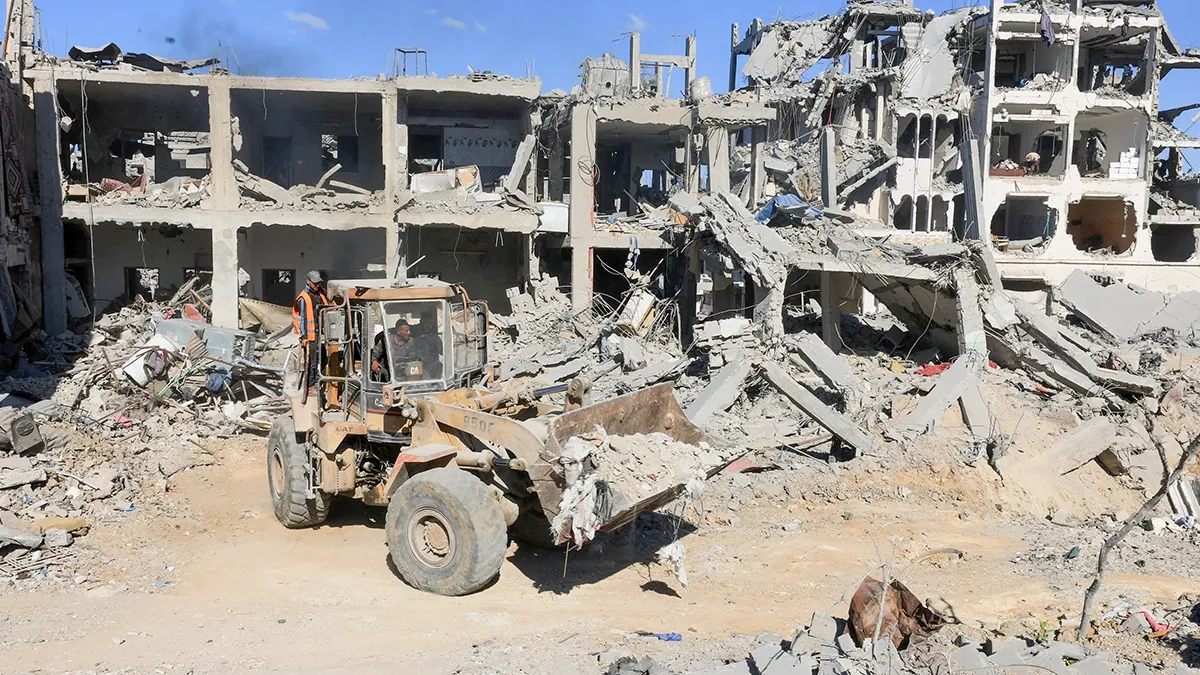
The destruction in Gaza is staggering, with estimates placing the physical damage at approximately $35.2 billion and further economic and social losses at around $22.7 billion. The housing sector has suffered the most, with damages estimated at $18 billion, followed by trade, industry, and transportation. The destruction of around 371,888 homes has left over 1.2 million Palestinians homeless, which is more than 60 percent of Gaza's population. In light of this devastation, the reconstruction of housing alone is projected to require $16.2 billion, making it one of the most pressing challenges in the recovery of Gaza.
In addition to housing, the reconstruction of damaged infrastructure, including transportation and water and sanitation systems, is essential. The challenge of clearing debris and rebuilding urban networks adds another layer of complexity to the reconstruction efforts. Morocco's expertise in urban planning and infrastructure rehabilitation positions it uniquely to assist in these critical areas.
Although Morocco has not yet established a specific funding program for Gaza's reconstruction, its involvement is clearly shifting from humanitarian aid toward more substantial reconstruction efforts. Notably, in July 2026, Morocco committed to participating in the International Stabilization Force for Gaza, which would include providing military personnel and a field hospital, thereby expanding its role beyond humanitarian assistance.
In this context, Morocco is also enhancing the capacity of the Bayt Mal Al-Quds Agency, which aims to channel support toward Gaza's reconstruction and the rehabilitation of essential infrastructure, educational, and healthcare facilities. The experience that the Agency has garnered from social development projects will be vital for Morocco's future contributions to Gaza's rebuilding efforts.
Morocco's experience from the Al Haouz earthquake is invaluable and positions the nation to effectively respond to Gaza's reconstruction needs. This experience involved rapid resource mobilization and the reconstruction of homes, roads, and essential services. The challenge for Morocco now lies in translating this expertise into operational capabilities applicable to Gaza, encompassing engineering, urban planning, and the rehabilitation of vital infrastructure.
As Morocco seeks to formalize its political and technical collaborations with Palestinian authorities, the development of a concrete reconstruction roadmap is essential. This plan will encompass priority projects, funding mechanisms, and the identification of necessary infrastructure interventions. Should these plans materialize, Morocco could successfully transition from a humanitarian aid provider to an operational player in Gaza's physical reconstruction, channeling its planning and implementation skills toward the recovery of the Palestinian territory.
As reported by atalayar.com.